it is fundamental to challenge the GAFAM regime from a perspective of anticolonial and transfeminist intersectional analytics. The crisis of presence at the global chains of exploitation is already mundane: by user power wasted—or washed away—by a capitalist patriarchal-colonial matrix of woven and wefted infrastructures; by an infrastructure of damage arranged around supply chain events such as the domesticated labor
production of microtaskers (or “Turkers”), the offshore labor production of hardware assemblers; by the shipping routes that routinely trace the colonial scheme; by the waste around smelters and refiners erasing life all around; by the care workforce that shoulders all this productive weight. In sum, by a convergence of powers entwined in the project of massive extraction, growth, and control.
To continue with the urge for a denser and more complex technopolitical imagination, those global chains of care need to be scrolled up and down, sideways, and underneath. Scroll the chains away from the userized nonlife flows hidden by Amazon. Scroll the chains through to show their damage. Scroll the chains along to tilt forces and erase GAFAM & Co.’s efficient machinery. Scroll off the chains, and partially repair them through other computational geometries of relation.
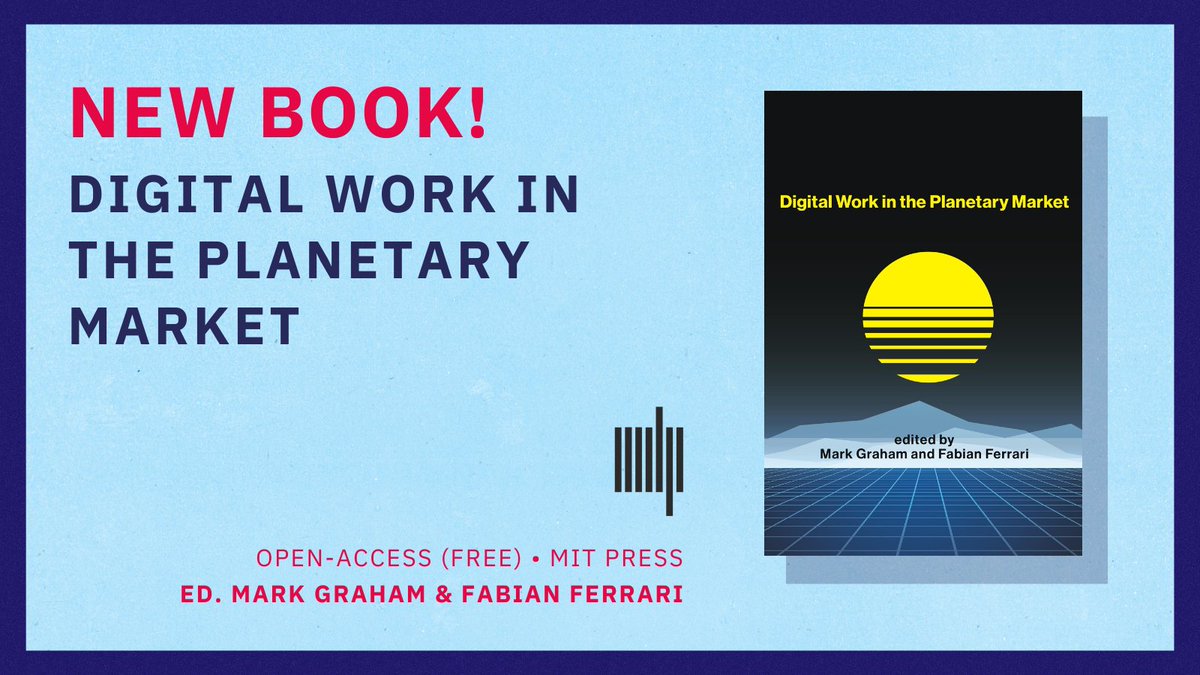
Our chapter, titled "Tilt the Scroll to Repair: Efficient Inhuman Workforce at Global Chains of Care" and co-written with artist-researcher Joana Moll, is finally out in the volume titled "Digital Work in the Planetary Market", edited by Mark Graham and Fabian Ferrari and published by MIT Press (2022) under fully open conditions:
https://direct.mit.edu/books/oa-edited-volume/5319/Digital-Work-in-the-Planetary-Market
& accessible in different formats (pdf, html5, epub or order paper copies) right here --> https://www.idrc.ca/en/book/digital-work-planetary-market
Understanding the embedded and disembedded, material and immaterial, territorialized and deterritorialized natures of digital work. Many jobs today can be done from anywhere. Digital technology and widespread internet connectivity allow almost anyone, anywhere, to connect to anyone else to communicate and exchange files, data, video, and audio. In other words, work can be deterritorialized at a planetary scale. This book examines the implications for both work and workers when work is commodified and traded beyond local labor markets. Going beyond the usual “world is flat” globalization discourse, contributors look at both the transformation of work itself and the wider systems, networks, and processes that enable digital work in a planetary market, offering both empirical and theoretical perspectives.
The contributors—leading scholars and experts from a range of disciplines—touch on a variety of issues, including content moderation, autonomous vehicles, and voice assistants. They first look at the new experience of work, finding that, despite its planetary connections, labor remains geographically sticky and embedded in distinct contexts. They go on to consider how planetary networks of work can be mapped and problematized, discuss the productive multiplicity and interdisciplinarity of thinking about digital work and its networks, and, finally, imagine how planetary work could be regulated.
Contributors
Sana Ahmad, Payal Arora, Janine Berg, Antonio A. Casilli, Julie Chen, Christina Colclough, Fabian Ferrari, Mark Graham, Andreas Hackl, Matthew Hockenberry, Hannah Johnston, Martin Krzywdzinski, Johan Lindquist, Joana Moll, Brett Neilson, Usha Raman, Jara Rocha, Jathan Sadowski, Florian A. Schmidt, Cheryll Ruth Soriano, Nick Srnicek, James Steinhoff, Jara Rocha, JS Tan, Paola Tubaro, Moira Weigel, Lin Zhang


![[proyecto] Altas latencias](https://blogger.googleusercontent.com/img/a/AVvXsEiBpD8AFlYRdLzeJ2Hsn_CW_e5gS2aqI95InyU5RVD32AgQq1pu7RkVfqaIVCx8HGOvz6-KsASWhMiTRiAOeMFuq_5CdJ4oBpbugFCz27q4naB5GwKSI6367EAzmdV7gwMJ3bsY49giAjtGaszVwN6XK8Jt9TGRgsuh4UAGYJiG6-BT5M8TUcuqDBvoOME=s220)

![[txt] A breeding ground for uncertainties](https://blogger.googleusercontent.com/img/a/AVvXsEj8Ul_82KszibGV8b6jg9LFyWXEGE4qp6ecSy5BMMylXRoJD3M9p69kVu-AzxnSX2giXA1KXDQK0N-9PgDXC3iiwOb8gbekKC9_uczQKXOnaWH8az3En1ZSVefP22hPQWRvsUBccZEqf9CI15VXUsq8xboFMelx4l9oFikZJpvUX3xTe4mnAAeXwpDzIg0=s330)
![[Bugreport] to Frontier Climate](https://post.lurk.org/system/media_attachments/files/111/901/018/803/503/560/original/1075209e931cabe8.png)
![[zine] Ancho](https://blogger.googleusercontent.com/img/a/AVvXsEgxhMNpFpNTQs8-WPjqQ4xMJ3_BZJbszhAfiHl63dmkzEof-nuHBGdzLZzpneNz9vTWNnw4k1RBBRlY8Lku7gu3bPCmoB58oyB8p0m85z8G4vsPwQWrNDmDhPrcLyvW0SP8AVn6WTAkKi6967tUChbVAl73hP9Umq097rixVNbci22Ua_iZFxOiunVkTjE=s312)
![[radio] naturoculturas son disturbios](https://blogger.googleusercontent.com/img/b/R29vZ2xl/AVvXsEh1vf5WGEHGsX7aYwBLxMSY5_yPI3DzKWwCdqAOOIDKz0yFkISa81hx2ljEMCPPb6bRtYCCtoOb89SdCQET4P_BJoQeYy5990dZ2FmiqJL_Sb_ROngQphHGA9wnu3rIZyUkI7LPLNDqRXE/s220/tapiz.jpg)
![[Journal] La composición activa de la presencia](https://blogger.googleusercontent.com/img/a/AVvXsEgWJBnXgfCm300uKPAr-n4sEqPCBHxy2Hxheu2bFuYCl0IgeJCmJ_7U6SwP01cDamYTfgGpbMtgeSS6KtRm5j85_bclhQ4wn7f8DfSKu7C3_AM87wNHhELUwQ_VXIemDotxFy_h2kiZuqa1h2vLKHeMUALEg63BeR_dbpHh4Y7DEfZgKekOA0eCxPT_lJk=s320)
![[fellowship] LaaS (Life as a Service)](https://blogger.googleusercontent.com/img/a/AVvXsEijogwX9jgADqQ9A00tu8fCFaF8ARU8Sq0EXI0Z_PBE8M-SVpgMWAUiHJjw4-QwLjz-KCQlOgyvJNwpvBLe41Gr7xN0xlWzvyrGxZg9mUIH9-q3xEF51MSk6UnyUkD--ZptqoMcp7XSlgD8wV5MVeUaN8o7X34SnScuLZ4C76XyW6U8JDneHWrSw8vZ=s220)


![[associate membership] TITiPI](https://blogger.googleusercontent.com/img/a/AVvXsEjcMlj6-I_3r2L84w6kGyECKoYCgG_clIbPgkJU643pGFonPn9P-UV_qnNI3V-pjgEVFigNgse4IABpsD7WRie8evGe1jdLZOV92rg_McRtrbSIJOTVzyUW5Xx4ITTYM3JL-d90tF-XGKpKscmUYcnrts654lnj1hVbrHZUBvKA8X5pZPXL6DIoILz9=s341)
![[escuela] Elefantes en la habitación](https://blogger.googleusercontent.com/img/a/AVvXsEgg8WMXXVVHA5uHIAlHGUstKTSRhzQEhEORdROKz8QBgLMPCtYxyNIyCnuFkFwDAoixgS1XMLDeGEtm5P0cXW3AUi6AB179S0Ei6BueXW8NXbREYnik1VICivjPvl7G2Ti597fcw2OQ38cWzV0BpfG3MijQiSAzCdVmj67HS4VIiCsQV5dLgdOubMvIGiM=s220)
![[book] Volumetric regimes: material cultures of quantified presence](https://blogger.googleusercontent.com/img/a/AVvXsEgmU-TcPBoSAK-bYjc2IS1c3j6YaoY0bAmoWeJphwdAVgJ1vRcZP_dg5Ki_GWBYPakurYUpM6XIlUGJKAKALaYhdx-sLtC-KlL3NocFIq5S3RzmuefQP1pCwpUTjJ4it_itZKmY1FLZ-GuvAE1PHWP90G9nxsDRdyPVaoyQxl6s3A0SQEeRxP5fNlcI=s332)
![[manual] Queering Damage. Methodologies for partial reparation... or not.](https://blogger.googleusercontent.com/img/b/R29vZ2xl/AVvXsEj8Q0pcpgV4ta3XRYXd7_TLrE-e8iIRW9gtbF-tRh5pKQClpqaw6qbr0dUadU7sASJ9ElOlYJwy4mPROA46dn7bGeTFwAb09LCR2yMuQOkeJUCeRUrAGKai3pPb9x7nvSaISuDx8FZlppg/s1600/QD.png)

![[project] the underground division, with Helen Pritchard & Femke Snelting](https://blogger.googleusercontent.com/img/b/R29vZ2xl/AVvXsEiP7ySE_-Ag-61vgRhsOgPJOVlvsnsupcriKB9x-nxLA_XjAYdkeYSOajqqqBnnGI82iX4wCbaDfnYfAc9lSHl0ny7ES0V1xTeJl3zW0sfLto6Ardt6AiZmYZlqizeDw98sijpGLY_K1p8/s1600/unthoughtinfrastructure.gif)

![[expo] Dorm en l'accident que provoca](https://blogger.googleusercontent.com/img/a/AVvXsEgjj7ASH7edRFh6yretcviCckrs19chm_iyuaa0PyNeRqKj6EWr5C8wRAUQXNsR0rSxSIY0-j_a0z1PfmEjabITfUBWfMwqCNKLo9Fvb65P31PtSbEiBBJ_HhiNrs1iVFZsD4LWicCfvZXM20ivsPoG2XfLBZYGBhv7Iavs2VPb0uGV2mYehjf7mzdm=s220)
![[exposición] La Irrupción](https://blogger.googleusercontent.com/img/a/AVvXsEiJnQT68iCPb08I1Bq9Cq8cGWfRLxF_cwD3tqfqovDvh1oy1L-Mj5DVkBsyBEezs9ydH0kVterKMClhihz3EkJgySfauazM8-YsPZRI2qUOQKSWKE8phvjFy5lPNqE5r60m0bbgm4eyMXVA4xktKU5hrJoQ6gBv22a7QRAhFlmFDxYQVATl6orDZ-oK=s311)
![[Fellowship] Spectral Infrastructure | Cell for digital Discomfort](https://www.bakonline.org/wp-content/uploads/2021/07/Spirit-Labour-1-web-2000x1335.jpg)

![[paper] Figurations of Timely Extraction](https://blogger.googleusercontent.com/img/b/R29vZ2xl/AVvXsEheNeBTv2n__LM26gVP5_NJsH4-vssVsRn3CspeiFnoCsUY4RmKBE1dTzYurmx73Nt5hceLv_zcORBxLnGV5AR3tJnb579NJ5194ThAdnH5itHI-e9W79rOLD5_sPpkmjjGb1RT1RVnmN0/s1600/hueco.png)
![[weft] The Relearning Series (with Martino Morandi)](https://constantvzw.org/site/local/cache-vignettes/L650xH614/arton3397-dd459.png?1609926532)

![[text] The Courier Bag Praxis of Friction](https://blogger.googleusercontent.com/img/b/R29vZ2xl/AVvXsEgBtBXr6VHozr_KsHsqSJ7_sMDHSSc0l0pD4wcrZJZzqX6IUeTjQEED64R-hg4QG0lK8RHN6J6j-BtRbsTDwI-R-5OlzwcCDYPHX_q7_yTCbgnJEqPic7LsADeclTIpqgX8SWZpdXdncKs/s1600/amz.png)
![[text] We Have Always Been Geohackers](https://blogger.googleusercontent.com/img/b/R29vZ2xl/AVvXsEg3_-X1JXUAU7D1PqsbnkyLFi1PAvVb4P9ZPszvgZkaI5q5lY4JDDPsjeBScyoev-cxl3DD9ocyeaj4ROLezLzA1RM00Ib3SGeaMUiNvnhsSOtRHVy9pK2WQ4p8gXBbDqEABMiaM6uhjzk/s1600/600px-Image04.png)
![[entrevista con Nerea Ubieto] unos corpus a través de otros](https://blogger.googleusercontent.com/img/b/R29vZ2xl/AVvXsEiUAX_3sRJEwxPRY1X9jmG1DxmZBTqhXRVHN3wcA4h_oO6HNIGt9uroK9oP9ktNm79nbj0z6Kt02SNIBynmRmAbxHJa3bWPttwiF1Iffm8azfPumTmr32-pC8bQJ1cRwFvUm5QRfYjiWrs/s1600/yaaun.hotglue.me.jpeg)
![[book] Iterations](https://blogger.googleusercontent.com/img/b/R29vZ2xl/AVvXsEg6AIPpC3jitHSZRTZUAUrI-C01YGIeyM7C7ZPDO0HQhUx0nqTOyVUdpOOJBVh66ZwBJk-Z_NLtlDZtIhB5zyj7lzi1psorzemK2pJKiRk75Z8_8K60nJcdJEz1nmUZqmTm-BId_XYjINo/s1600/iterations_img.png)
![[text] Depths and Densities: a bugged report](https://blogger.googleusercontent.com/img/b/R29vZ2xl/AVvXsEj2kAiZhHGbiApkAnVW086MP8Auew-PJjqA5m1dP0C0PQTv99laH46OO1-5K5YOzYQIYBpgG4SsC8ibvqLz2fkIBoUPi3_dL6dfOir_DosCim4oY2Tq9877vFU-6SSWLfps0rLs_v3wBCM/s1600/2.gif)
![[expo] ROCK REPO](https://blogger.googleusercontent.com/img/b/R29vZ2xl/AVvXsEjMCpx4QnmsTfWUtRNlzUOhGnEWqZozBYCPkzKG3cs29OniGUqAzXFMDp4EggGvEM1B3xDC-Kf9QFHKe2EqKL6QGLhttL6FzalmkJYo8f9_aKdnmiUf61_QMaoa7F228d5farlhzSeV1Ok/s1600/ROCKREPO.png)
![[ciclo] unsupervised imaginations](https://blogger.googleusercontent.com/img/b/R29vZ2xl/AVvXsEhjO8oPteLww8zP6OPAvLXOm4uiwvBIFJ0k9DWqK7YEfSau1A9E0RdvY0-qokscG-y_a9sgou1xkCNBSw_VvBOlsFqLbcR_HSDg7K3hRB5LqkOjTdwfaCWLsemvyyt1lttyqz3zgyuzGZY/s1600/done.png)
![[texto] O o no O](https://blogger.googleusercontent.com/img/b/R29vZ2xl/AVvXsEjW0TtZQPjFHfhxlODgGdVzgg68Ac0-ARhty2p_GLpS376bYEQzPCLV3rcfveLPHTKa5NayqjcU5tkEHR1XravZ0ELvayh3Llh-dTbLDoTzqCu2-o4_XL-x7BOorECQVHzvrAbPgArKd5I/s1600/OOO.png)

![[text] testing texting South: a political fiction](https://s-media-cache-ak0.pinimg.com/236x/ee/bb/77/eebb777b79c372e431f8f01a9f8c417e.jpg)

![[texto] connivencia km 0](https://a-desk.org/wp-content/uploads/2019/02/yCNQVn7-595x356.jpg)
![[texto] tendido topológico de opacidad](https://lh3.googleusercontent.com/blogger_img_proxy/AEn0k_sCa0hN8wWtiMkNA_J3W0C-ldWTFILkJ0fTNSEbsmPCYjfUoeFLxVj74VaJHxGgmueGkhx3NC5oRgqyMMiZ-LWoLJgTmZv5YUAUJ7JbKXsN9MkHv7ocSCsJ8QEdMaBWqYoyEkpTIFls7irTiLbSmKUtudEpDkMvnoMT7IqbJrGnNg=s0-d)

![[workshop] queering damage: methodologies for partial reparations... or not](https://hangar.org/webnou/wp-content/uploads/2018/09/fotoactivitat-448x197.jpeg)
![[text] ultrasonic dreams of aclinical renderings](https://blogger.googleusercontent.com/img/b/R29vZ2xl/AVvXsEgQ0Hyf8egbRwVzEbocuGIrXelXCAPHtrkb_7qMB6MbJQpI-ImX-BnGi1Gz6BBmBUJ6ikF14F0XEdxaRvoPF8fpfA_zK2nzYx3o4fhQ_6AxTaJvn_ONeJ7kO54Ht23J4coCzwb9VNhJ7lo/s1600/ada.png)
![[text] la Caníbal Mondothèque](https://blogger.googleusercontent.com/img/b/R29vZ2xl/AVvXsEgSPEAotBhGULLOoGt7ah32WUd5Uhq7OFyBOu0HMmhi_vXY1YhVzPzfhS6z-Q9xoAUayFSZ1T875S6PzU7hLfQuqpFSffkWSElVxere3sOffMK6uJVCu6rtwjcMF7VSL8IHMqewLUaRARw/s1600/sss.png)
![[taller] Signos de desorden clandestino en la multitud uniformada y codificada](https://blogger.googleusercontent.com/img/b/R29vZ2xl/AVvXsEh2NuAewDFzlY_WN91ef8C-irr-DsGHBdEOhztzIwEqDxv-BFgccpIu7wCcZQXrhqhc6eQJBaYLJwEWSxCpoDu4WSGYO6RP2oJDte-QD2B6xGpWy5_HHAj_na47Qr4JM2x99u_CErHbcgY/s1600/signos+de+desorden.png)
![[book scanner] hackthebiblio](https://blogger.googleusercontent.com/img/b/R29vZ2xl/AVvXsEhWvEJ8bLbWXegmJmJjy0IvTFE4zHz-PQXgbVtK3YexrUu0dGq1dvhuzekD6YgOcBDJqjJiZveoMSo9EwTJAZvNK1BZXwEvnSmzPk3v-8xuJyUxgTdyjFnLSQe-AZSS7kxnFzCsoM6my74/s1600/marron.png)


![[installation] somatopologies](https://lh3.googleusercontent.com/blogger_img_proxy/AEn0k_twRclx7m8a8rzfAwfConv-fpEvSw0feJBB7QPTBwX97PzHtJYI-dE_4Eq9Q9tIzgI0gvc1DvyT3mxqWqKkNml1zWSKMIN6XQYWWlvhQ6b8NY4BUf4R8MC9nzD87lNZqI1tnci6rbKszeOkmrLrORdgVY-p69X9Ej8wKn_zYhI8f_k=s0-d)
![[workshop] ageing companions](https://blogger.googleusercontent.com/img/b/R29vZ2xl/AVvXsEgLEng19oM7Z1ABKaMNTvuNjr70o1HJvJtwCcBNQw-mN2p-j6LmAqGufemrhR2Bo_vca7ps4MYHDxpVfpbMpy3kH2pgjyrN-qal4iSVOMZBquhe2Yr3c0Qj_mWNiCAPBtceZwOQqLjwGSM/s1600/ageing+companions.png)
![[curso] ya aún (con Laura Benítez)](https://blogger.googleusercontent.com/img/b/R29vZ2xl/AVvXsEj5BUUemTv0dcKlSWxoe-95jPAn8EwoM_w0sxSEqGr2sxMN1WWY61oAFm3rkmZj-PynKmvxFGr0mu7IKZpa_mYb1AdlQoaKLXUhkTYlNXrNy-A2Zbf274hmC4iCs9pzCYl8D80VyIxTgD8/s1600/yaaun.png)
![[text] MakeHuman @ posthuman glossary](https://blogger.googleusercontent.com/img/b/R29vZ2xl/AVvXsEjAxY9qjS-hUJzSbUY4EvX-FZ6gRgbrXq0ehjWtRXZnjJvN8HEfQq1-RG8Fi-5-9JCK9DG6SNi_iod-ARLMAHWpgL9XdQFISHjvahpFJhn6dxFKMuVovjuMICweTAJV0tApChjht-ZXCVE/s1600/posthuman+gloss.jpg)
![[taller] Las promesas de los algos: una visión inapropiada/ble (con Nicolas Malevé)](https://hangar.org/webnou/wp-content/uploads/2018/01/tensorflow-448x298.jpg)
![[text] dis-orientation and its aftermath](https://media.giphy.com/media/L35lnVzYLgHFS/giphy.gif)
![[artwork] UKI, a viral game (with Shu Lea Cheang)](https://lh3.googleusercontent.com/blogger_img_proxy/AEn0k_vvFCOdtF9CUx-E3cGbufJX4G9K4wwTKA5XV9GKLlRFB01USOsDdzR7XW2WaFSnR1gItX94VU9k3ZDSnmzYkFyKxv6Mny09yzDudEjJXwD7wRIzdGKlkbkdBW71l1djwLgdTtN9dXW1cT8gHzO6vQfO-zOv2-rl=s0-d)
![[curso] fonaments del disseny](https://blogger.googleusercontent.com/img/b/R29vZ2xl/AVvXsEgD02few_onlQayFaMENECRZYVjbfJ-1BivdgWn_PntkkwCCG8jUGdswJyugFctCcFRBB3lwSXUZotFCc5EnxqfxSKywMrdfAVfBXvPsb7vcdIdr2RUowODsgri4EReXMudK_3IAStF_3w/s1600/fonaments3.jpg)
![[revista] L/EN/G/U/A/J/E/o](https://blogger.googleusercontent.com/img/b/R29vZ2xl/AVvXsEgdBBru_p5K4zK77CmgtRcK2hLubFw46lHgQqqXqJoMuEeIDJr1933trw0vcve7q3b9Mhjy96nYQDPxWYddDZ60RbtwCZcUoIYJq_F7WWd9xsnfoqhXgyZNquQLkFNbsbz7dDJoaXRZZWc/s320/Captura+de+pantalla+2017-09-10+a+la%2528s%2529+21.46.40.png)
![[methodology] workshop à la carte](https://blogger.googleusercontent.com/img/b/R29vZ2xl/AVvXsEirP91N_kdgle-XhzJxTu9qeU4rnpcG-tl-z6em-_ecKjZpIsTgRgOQn19a5SLVkW3SJ6rbkWNg7gCHdRFtXMkc4gE4OpWRGHcch_ylyVaNDjSXLkXPrRD8wf02542DxRh07xWwc54Hbxw/s1600/teo.png)
![[text] tongues in the making](https://blogger.googleusercontent.com/img/b/R29vZ2xl/AVvXsEgXl-8Ave1Yx3VqxhcrI24uG_fzX8Ohc8LNjgv8KkTq4s1W9J0LH_iVG22E22ojnNFUauSMGvN9M_JMRod7iHqahzkJMHjWvHPV0B4v1i14iRtGWNga8NmZ-LdXXlOPqAtdISnR2MQFd1Q/s1600-r/Captura+de+pantalla+2016-02-04+a+las+13.53.52.png)

![[texto] altas tensiones, saberes menores](https://lh3.googleusercontent.com/blogger_img_proxy/AEn0k_smVv6qXKz-kcrQUJSjF00L1BBeRh3nyP8KPfb-mmK23LPypNAJ26xbQzXJ5Sl5B53n6A9nd_rUN6Tm-dSnicSLKGDLxP6KBqUubeCsaMPPWEv00fOb2Xv6U9LrEfkP9DRwwDlz2Qvto_fUyeBdwP5alDWuRTL2AC4pGjgcBN4O=s0-d)
![[text] new criticals: cadavre exquis](https://lh3.googleusercontent.com/blogger_img_proxy/AEn0k_uLA9asYBPyH9S3-XTZllESOLML0z-acFoh9pEztasCf605CGt-jn4GUOD2x0-btvbrqZN933XmAmNECdjjlXWsvAiJ2cr8pW2oUlPwssapSnXjCaEj7UU6wuoGoYd-kcHsMxddfauroOUwOtT3zLoh5WfxV8_awVA=s0-d)

![[article] Let's first get things done! / Fiberculture Journal #26](https://blogger.googleusercontent.com/img/b/R29vZ2xl/AVvXsEhaDyKgtq30kos1sAGxvccGpJru0lFDJpNdr2Znui0GZq-uBP4rv7qq4wxZIHlAqGloQcjpEfhYlftguJHCfQakT3_ddO8Rs5opBTGClnrALMsSpNtDyR2ljW37LPnBtUfJ1gEO_aZqvt0/s1600-r/graph.png)
![[post] chismes del aprender](https://lh3.googleusercontent.com/-ECXXUPo6Pyyh40LLcwXtRvV95OpS-w6misVn0DL7n1jkl7tYKBDhyPVtRayTBEARSvAIFlvR0Ajv1PdHLgBIs8un7fymWjqZRhedhJiizk6HodrTJYwICBn2w)

![[paper] "La materia contraataca: una tentativa objetológica"](https://blogger.googleusercontent.com/img/b/R29vZ2xl/AVvXsEhqled-DehDpXZnTMEkO0WSjozmkdTcjnEaTT27rrnu1q69whrT275w3Hs7zzeUtLfNJXs73mXB1Q0lwJjR2AGzInb6WpEUfRFWRui5s-YhE7CAf89z1j3TDKQMAmIyDr_XF22DcA9506I/s1600-r/m%25C3%25A1quina_cuadruple+haz.jpg)
![[expo] not yet know: ontologías sorpresa y agencia-ficción](https://lh3.googleusercontent.com/blogger_img_proxy/AEn0k_vhGpUlQuGe2onG5nejaJbBUlBn3qr8WwkfN1UxMIpiJUnnqXO6QZYezLIIFgBFIB6jrQ_NLtVtwH5j9a0lfOg5JPl21MXGbPnq0-2O3msWXCAL1mIDZKT-oKkBD1I_7NzJHxAvb9tTz5ROnp6hRF81P_nYzr5rzWlkWyioSODGxYPs=s0-d)

![[libro] "El futuro de los centros culturales en la europa creativa"](https://blogger.googleusercontent.com/img/b/R29vZ2xl/AVvXsEjkwzqzUznKska3wNFn9G6GyFhyphenhyphen6v2ptsM6suKRqoeq6FUzv7Rs8mx3YQABu9QFWpj0XPZs32NhE2DNCgRSMEnnhPw4SQjSKsm1MuMrEvBDnO7z__-iWxNqt1Mn61h00R-4Co76tF7EdXY/s1600/euroz.jpg)
![[zine] catálogo restrospectivo de una soberanía objetual](http://40.media.tumblr.com/474e97cd6589b57032fbb079230ae643/tumblr_nkr05twfSL1tu5ph3o1_1280.jpg)
![[wiki] protocol for interdisciplinary research / Hangar / Grid_Spinoza](https://blogger.googleusercontent.com/img/b/R29vZ2xl/AVvXsEjmi8Df_v7kPAefpI6pLe-Xl-NhQx3VsKNEiZGO_tB1E2HCbKmQY69oI6SkN36aCFzzlI0ihwKUevFeZbmEAT-YBIGGCTfE_XlHvVbRHrnAAJS7_aCsOZW9bmeIzv1U06IVz_ik6btFPfM/s1600-r/Pantallazo.png)


![[monográfico] Laboratorios de Procomún](https://blogger.googleusercontent.com/img/b/R29vZ2xl/AVvXsEjjbDSQa0RdXhfgnejeyUgQL7ae7l7d3rC5-NoyRkrNiLiMGdo27hBA2NIiJTGDVDwkJ1JZuVh9rnQYhvbdZf8ru5Ou1W-trOX7QfMPS0h3t57HEiY3wu4CeXrWW9TfDk7VpKP6rvb17HU/s1600-r/teknokultura.png)
![[libro] Teknokultura: tecnociencia, arte y cultura](https://lh3.googleusercontent.com/blogger_img_proxy/AEn0k_vu5rdI7ozPJzoyuMcY_lPbBBvwSk4jeejnuENx2esc5_cenAAr_s9LA17RmyyYYgWyH7GL6Liz7Nje-nZ3OmFu1Oduv_ebvhMaHgJF4fYyFvgp07LMIbWUQmPyt144JtfWzZAHmTFkGNTlB_Umq53DTAwg8hwpkMG6uXiCQNYx=s0-d)


