
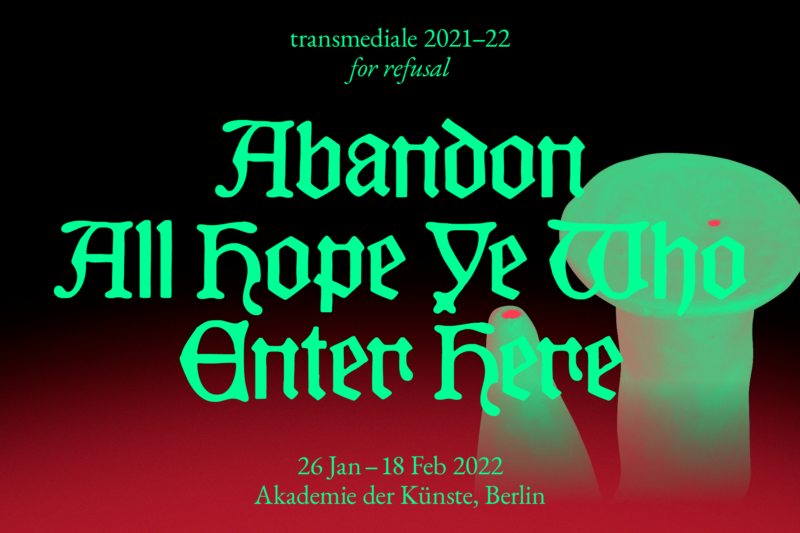
Introduction for the panel: Anti-Colonial Tech through Resistance and Discomforts, planned for transmediale, 2 February 2024. Prepared by Varia, Constant, TITiPI, Digital Discomfort Workgroup
-- who are we and why are we here
Before
starting this conversation, and share some of our techno-disobedient
practices, we would like to give you some context about who we are and
why we are here today.
As
you probably know, a call for strike circulates at the moment. It asks
for international cultural workers like us, to withdraw our labor from
German cultural institutions as a way to resist the suppression of
freedom of expression, specifically expressions of solidarity with
Palestine. Some participants and members of the tm team that we deeply
respect, have decided to withdraw their participation. We understand
their decisions to do so.
Also, local organisers have questioned our presence.
And yet, we are still here.
We
are here because we want cultural spaces in Germany, and everywhere, to
commit to liberationist struggle and internationalist solidarity.
After
many discussions, we decided that this means we need to inhabit spaces
that allow for these conversations, especially the conversations that
are increasingly being banned, silenced or avoided across contexts.
So here we are, in all of our doubts, discomforts and contradictions.
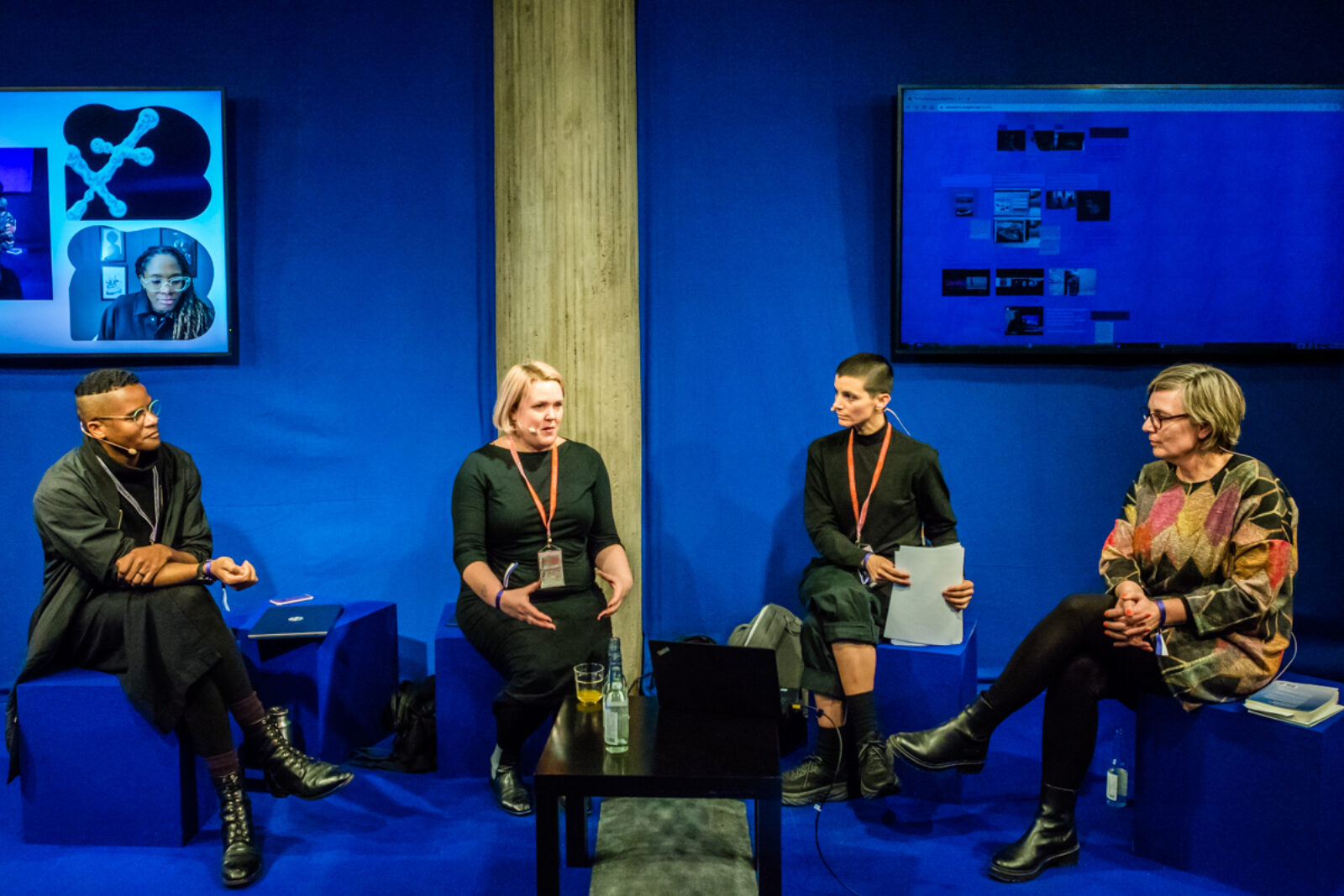
We
are artists, theorists, designers, researchers and activists. We work
from Barcelona, Rotterdam, Brussels, Amsterdam, Basel, Glasgow and
elsewhere.
We
form a network-of-networks which includes Varia, TITiPI, Constant, the
Digital Discomfort Working group and it extends into many other related
practices.
While
not everyone has decided to be here on stage, the conversation has been
shaped by exchanges between all of us, in preparation for our presence
today, but already for many years.
Together
we explore modes of resistance to the extractive, and colonial approach
of technological infrastructures that are being modelled and
proliferated by Big Tech companies in collaboration with nation states,
Big Oil and the finance industry.
We
engage with trans*feminist, anti-colonial practices, experiment with
ways to infrastructure otherwise, and platform divestment.
We
practice technodisobedience and abolishing the cloud regime. For
example, we have organized a trans*feminist digital depletion strikes
that we first started organising a year ago, with a meeting here in
Berlin.
-- to say it as clear as we can
But before continuing, to say it here as clear as we can:
This work opposes anti-Muslim hatred, anti-Semitism, racism, apartheid and all other forms of oppression.
Our practices have been and continue to be in solidarity with the
people of Palestine and their right to self determination and freedom.
We need to resist the technological regimes that obstruct their capacity to make a life worth living possible.
The only path forward is to end this brutal occupation.
We call for an immediate and permanent ceasefire.
To release all hostages and unlawfully detained prisoners, both in Gaza and the whole of Palestine.
For a future where everyone is equal and all Palestinians have the right to return home.
-- what is gathering us
Since
the beginning of Israel's most recent deadly siege, which has turned
into an explicit genocide in Gaza, we started to meet more often, with a
renewed urgency.
With
many others, we saw how proprietary digital platforms were once again
the go-to places for informing, organising, and raising voices.
Soon,
reports about the shadow-banning of Palestine-related content on all
major social-media platforms became mainstream knowledge. It lead to a
more widespread awareness of the colonial figurations propelled by these
platforms, because they invisibilized pro-Palestine content or outright
censored them.
Journalists
and activists suggested hacks to "fight the algorithm": they suggested
to post selfies in your stories, comment on Palestinian content as if it
was vacation or food content, in addition to all the different signs,
symbols, and words to use instead of being able to state clearly what
was and is still happening. But these efforts are all about continuing
to exist within those platforms, instead of divesting from them.
We
are in solidarity with the reasoning of many to keep using these
platforms for organising resistance and for evidencing the genocide. But
it is heartbreaking to realise that these same platforms are provided
by the companies that make up the israeli military-technological-startup
complex, and that it feels unimaginable to desert or boycott them.
We
have seen before how at moments of crisis political urgencies cause a
separation between the struggles for social justice from those towards
just technologies, and we have tried in many ways to think with and as
activists on how to develop other habits of making struggles present,
other modes of archiving and organising.
But this time it seemed different.
All
our attempts at affirmative software and network practices, and ways to
communicate online otherwise, do they actually make sense when
urgencies such as these arise?
Opting
out of commercial platforms means that it has become difficult to
connect with potential allies, solidarity contexts and places for
radical transformation, paradoxically at a moment that a critique of the
extractive and exploitative modes of these platforms became painfully
reconfirmed.
-- it is not just social media, not just Palestine
And of course, it is not only about social media.
The
many issues with what the transmediale program calls "the logics of
content production" are only part of the colossal infrastructures of
oppression and subjugation that are being rolled out as we speak. The
scale at which they operate seems to pulverize our experimental,
collective but modest attempts at thinking and doing computation
otherwise.
Amazon
and Google's cloud fueled collaboration with the Israeli Defense Forces
provides facial detection and sentiment analysis technologies that are
deployed in Gaza. This technology allows for further surveillance of and
unlawful data collection on Palestinians, and facilitates expansion of
Israel’s illegal settlements on Palestinian land. The Nimbus project
shows how the data produced by using Big Tech services trains AI models,
which then end up being mobilised in colonially-motivated warfare.
There
is a mutually reinforcing cycle in place, as the Israeli tech sector is
characterized by a sort of military-apartheid-startup continuum. A
prime example is Unit 8200, the military intelligence operation of the
IDF. Unit 8200 is responsible for waging cyberwarfare, code-decryption
and surveillance of Palestinians, and has a great deal of alumni who
have founded companies both in Israel and Silicon Valley.
As published in the Perspective Paper of the Begin-Sadat Center for Strategic Studies on December 28th, 2023:
More than 1,000 start-ups have been founded by 8200 alumni. Its
graduates are involved not only in cybersecurity start-ups but in many
other fields as well, ranging from Waze to Wix to SolarEdge. These
examples represent only a small fraction of the broader trend. It is no
exaggeration to assert that graduates of these units have significantly
shaped the Israeli hi-tech sector over the past decade. These units are a
true powerhouse propelling the Israeli hi-tech sector, with a
significant portion of the technology they develop flowing back to
defense applications.
Bar-Ilan University's BESA Center Perspectives Paper No. 2, 248, December 28, 2023
The
Israeli weapons industry does not hide its market advantage of being
able to field-test weapons and technology, at the expense of Palestinian
people.
The
Pegasus trojan suite and the Heron drones, deployed for internal
surveillance and warfare, make their respective producers world leaders
in their trade. Of course these weapons are for sale to nations
authorized by the Israeli Ministry of Defense so that other colonial
projects can make use of it. For example the Israel-Morocco
normalization process has been oiled with the access to IDF's tech which
Morocco quickly put to use to support their own colonial efforts in
Southern Sahara. The Frontex agency that militarizes the borders of
Fortress Europe is another client of the Heron drones, with which it
observes and tracks the movements and the sinking of migrant vessels in
the Mediterranean, and Azerbaijan has joined the list of clients of the
Israeli arms industry, too, in the occasion of its ongoing war with
Armenia.
What
has been encouraging in all this, is that the emerging visibility of
these connections has meant that many began to do critical
investigations into these widely used tools and softwares. There is the
project that showed steps to move away from or boycott Wix, there has
been the "No Tech for Apartheid" campaign and also a collective
awareness was created around the censorship that people have
experienced. It has resulted in more and more people seeking
alternatives, or simply logging off.
In
solidarity with ongoing efforts for resistance, as well as the need for
making struggle visible, we have to figure out how we can together
divest from daily technological habits that continue to thicken our
complicity in these violent acts. From Google Drive to Instagram, if
there are no outsides to these companies then we need to find other ways
to resist them.
But how to do that.
-- what we mean by anti-colonial tech and how it relates to our solidarity for Palestine
What
is becoming clear is that anti-colonial technologies, if anything, need
to reckon with the intrinsic connection between projects like Nimbus
and the everyday business of Google and Amazon. It is no accident or
miscalculation on their part to collaborate with the state of Israel and
to provide the means for deploying genocide and deepening apartheid.
Palestine is the testing ground for technologies that are then used and
exported throughout the world. As we have seen from the battlefield to
demonstrations on streets in the US and Europe, these weapons and
tactics will come for all of us. In that sense, the global call that "We
are all Palestinians" should gives us pause to strengthen our
solidarity and our vigilance.
Anti-colonial tech are not just about resisting Big Tech, that is only the beginning.
Of
course we need to resist surveillance and data extraction, but when we
say "anti-colonial tech", we mean technological practices that resist
the central, major and uniforming narrative of contemporary computation.
It is about resisting the depletion of creative possibilities for life
while paying attention to ways that nation states, tech companies and
finance collaborate to erase entire populations including their
cultures.
Anti-colonial
technologies radically foreground vernacular, situated, specific
technodiversities that are fundamental for resistance and survival.
They refuse infrastructure-solutionism in response to all difficulties: ecological, social, economical, or epistemic.
They
work against infrastructural violence at different scales at the same
time. Banal and breathtakingly colonial, all routed through the
smartphones in our pockets.
-- about the conversation
So where to start?
It
is clear that we need to operate on multiple timelines of urgency; we
need quick forms of organising, but also to lay the ground for working
towards longterm divestment, towards joyful, systemic techno-political
change.
We
therefore decided to spend the folloẃing 45 minutes with you to share
some of the things in process, some beginnings, modest proposals for
moving networks and political engagement away from toxic cloud
environments, activating paths towards anti-colonial tech.
This
conversation is also a call for others to join this work, and while we
opted out for a Q+A on stage today, we warmly invite you to come see us
afterwards and find out how we can continue doing this work together.
Most
of the practices we will present do not respond to the concerns we
raised directly. They are the ground, the starting point for an
experimentation with technopolitical practices that can take up issues
of scale, control and agency, that can deal concretely with other
economies that resist extraction, with other ways of data ownership,
with labour involved in maintenance of infrastructures, with ways to
build solidarity, or simply with what it means to work with old devices
and low energy consumption.
We think that possibilities for anti-colonial technology might be there.
We'll
try to hold on to 'fragments and pieces, experiments and possibilities'
that are already here, present. Thinking with Ruth Wilson Gilmore's
work on abolition, we opt for building the future from the present, in
all of the ways we can.



![[proyecto] Altas latencias](https://blogger.googleusercontent.com/img/a/AVvXsEiBpD8AFlYRdLzeJ2Hsn_CW_e5gS2aqI95InyU5RVD32AgQq1pu7RkVfqaIVCx8HGOvz6-KsASWhMiTRiAOeMFuq_5CdJ4oBpbugFCz27q4naB5GwKSI6367EAzmdV7gwMJ3bsY49giAjtGaszVwN6XK8Jt9TGRgsuh4UAGYJiG6-BT5M8TUcuqDBvoOME=s220)

![[txt] A breeding ground for uncertainties](https://blogger.googleusercontent.com/img/a/AVvXsEj8Ul_82KszibGV8b6jg9LFyWXEGE4qp6ecSy5BMMylXRoJD3M9p69kVu-AzxnSX2giXA1KXDQK0N-9PgDXC3iiwOb8gbekKC9_uczQKXOnaWH8az3En1ZSVefP22hPQWRvsUBccZEqf9CI15VXUsq8xboFMelx4l9oFikZJpvUX3xTe4mnAAeXwpDzIg0=s330)
![[Bugreport] to Frontier Climate](https://post.lurk.org/system/media_attachments/files/111/901/018/803/503/560/original/1075209e931cabe8.png)
![[zine] Ancho](https://blogger.googleusercontent.com/img/a/AVvXsEgxhMNpFpNTQs8-WPjqQ4xMJ3_BZJbszhAfiHl63dmkzEof-nuHBGdzLZzpneNz9vTWNnw4k1RBBRlY8Lku7gu3bPCmoB58oyB8p0m85z8G4vsPwQWrNDmDhPrcLyvW0SP8AVn6WTAkKi6967tUChbVAl73hP9Umq097rixVNbci22Ua_iZFxOiunVkTjE=s312)
![[radio] naturoculturas son disturbios](https://blogger.googleusercontent.com/img/b/R29vZ2xl/AVvXsEh1vf5WGEHGsX7aYwBLxMSY5_yPI3DzKWwCdqAOOIDKz0yFkISa81hx2ljEMCPPb6bRtYCCtoOb89SdCQET4P_BJoQeYy5990dZ2FmiqJL_Sb_ROngQphHGA9wnu3rIZyUkI7LPLNDqRXE/s220/tapiz.jpg)
![[Journal] La composición activa de la presencia](https://blogger.googleusercontent.com/img/a/AVvXsEgWJBnXgfCm300uKPAr-n4sEqPCBHxy2Hxheu2bFuYCl0IgeJCmJ_7U6SwP01cDamYTfgGpbMtgeSS6KtRm5j85_bclhQ4wn7f8DfSKu7C3_AM87wNHhELUwQ_VXIemDotxFy_h2kiZuqa1h2vLKHeMUALEg63BeR_dbpHh4Y7DEfZgKekOA0eCxPT_lJk=s320)
![[fellowship] LaaS (Life as a Service)](https://blogger.googleusercontent.com/img/a/AVvXsEijogwX9jgADqQ9A00tu8fCFaF8ARU8Sq0EXI0Z_PBE8M-SVpgMWAUiHJjw4-QwLjz-KCQlOgyvJNwpvBLe41Gr7xN0xlWzvyrGxZg9mUIH9-q3xEF51MSk6UnyUkD--ZptqoMcp7XSlgD8wV5MVeUaN8o7X34SnScuLZ4C76XyW6U8JDneHWrSw8vZ=s220)


![[associate membership] TITiPI](https://blogger.googleusercontent.com/img/a/AVvXsEjcMlj6-I_3r2L84w6kGyECKoYCgG_clIbPgkJU643pGFonPn9P-UV_qnNI3V-pjgEVFigNgse4IABpsD7WRie8evGe1jdLZOV92rg_McRtrbSIJOTVzyUW5Xx4ITTYM3JL-d90tF-XGKpKscmUYcnrts654lnj1hVbrHZUBvKA8X5pZPXL6DIoILz9=s341)
![[escuela] Elefantes en la habitación](https://blogger.googleusercontent.com/img/a/AVvXsEgg8WMXXVVHA5uHIAlHGUstKTSRhzQEhEORdROKz8QBgLMPCtYxyNIyCnuFkFwDAoixgS1XMLDeGEtm5P0cXW3AUi6AB179S0Ei6BueXW8NXbREYnik1VICivjPvl7G2Ti597fcw2OQ38cWzV0BpfG3MijQiSAzCdVmj67HS4VIiCsQV5dLgdOubMvIGiM=s220)
![[book] Volumetric regimes: material cultures of quantified presence](https://blogger.googleusercontent.com/img/a/AVvXsEgmU-TcPBoSAK-bYjc2IS1c3j6YaoY0bAmoWeJphwdAVgJ1vRcZP_dg5Ki_GWBYPakurYUpM6XIlUGJKAKALaYhdx-sLtC-KlL3NocFIq5S3RzmuefQP1pCwpUTjJ4it_itZKmY1FLZ-GuvAE1PHWP90G9nxsDRdyPVaoyQxl6s3A0SQEeRxP5fNlcI=s332)
![[manual] Queering Damage. Methodologies for partial reparation... or not.](https://blogger.googleusercontent.com/img/b/R29vZ2xl/AVvXsEj8Q0pcpgV4ta3XRYXd7_TLrE-e8iIRW9gtbF-tRh5pKQClpqaw6qbr0dUadU7sASJ9ElOlYJwy4mPROA46dn7bGeTFwAb09LCR2yMuQOkeJUCeRUrAGKai3pPb9x7nvSaISuDx8FZlppg/s1600/QD.png)

![[project] the underground division, with Helen Pritchard & Femke Snelting](https://blogger.googleusercontent.com/img/b/R29vZ2xl/AVvXsEiP7ySE_-Ag-61vgRhsOgPJOVlvsnsupcriKB9x-nxLA_XjAYdkeYSOajqqqBnnGI82iX4wCbaDfnYfAc9lSHl0ny7ES0V1xTeJl3zW0sfLto6Ardt6AiZmYZlqizeDw98sijpGLY_K1p8/s1600/unthoughtinfrastructure.gif)

![[expo] Dorm en l'accident que provoca](https://blogger.googleusercontent.com/img/a/AVvXsEgjj7ASH7edRFh6yretcviCckrs19chm_iyuaa0PyNeRqKj6EWr5C8wRAUQXNsR0rSxSIY0-j_a0z1PfmEjabITfUBWfMwqCNKLo9Fvb65P31PtSbEiBBJ_HhiNrs1iVFZsD4LWicCfvZXM20ivsPoG2XfLBZYGBhv7Iavs2VPb0uGV2mYehjf7mzdm=s220)
![[exposición] La Irrupción](https://blogger.googleusercontent.com/img/a/AVvXsEiJnQT68iCPb08I1Bq9Cq8cGWfRLxF_cwD3tqfqovDvh1oy1L-Mj5DVkBsyBEezs9ydH0kVterKMClhihz3EkJgySfauazM8-YsPZRI2qUOQKSWKE8phvjFy5lPNqE5r60m0bbgm4eyMXVA4xktKU5hrJoQ6gBv22a7QRAhFlmFDxYQVATl6orDZ-oK=s311)
![[Fellowship] Spectral Infrastructure | Cell for digital Discomfort](https://www.bakonline.org/wp-content/uploads/2021/07/Spirit-Labour-1-web-2000x1335.jpg)

![[paper] Figurations of Timely Extraction](https://blogger.googleusercontent.com/img/b/R29vZ2xl/AVvXsEheNeBTv2n__LM26gVP5_NJsH4-vssVsRn3CspeiFnoCsUY4RmKBE1dTzYurmx73Nt5hceLv_zcORBxLnGV5AR3tJnb579NJ5194ThAdnH5itHI-e9W79rOLD5_sPpkmjjGb1RT1RVnmN0/s1600/hueco.png)
![[weft] The Relearning Series (with Martino Morandi)](https://constantvzw.org/site/local/cache-vignettes/L650xH614/arton3397-dd459.png?1609926532)

![[text] The Courier Bag Praxis of Friction](https://blogger.googleusercontent.com/img/b/R29vZ2xl/AVvXsEgBtBXr6VHozr_KsHsqSJ7_sMDHSSc0l0pD4wcrZJZzqX6IUeTjQEED64R-hg4QG0lK8RHN6J6j-BtRbsTDwI-R-5OlzwcCDYPHX_q7_yTCbgnJEqPic7LsADeclTIpqgX8SWZpdXdncKs/s1600/amz.png)
![[text] We Have Always Been Geohackers](https://blogger.googleusercontent.com/img/b/R29vZ2xl/AVvXsEg3_-X1JXUAU7D1PqsbnkyLFi1PAvVb4P9ZPszvgZkaI5q5lY4JDDPsjeBScyoev-cxl3DD9ocyeaj4ROLezLzA1RM00Ib3SGeaMUiNvnhsSOtRHVy9pK2WQ4p8gXBbDqEABMiaM6uhjzk/s1600/600px-Image04.png)
![[entrevista con Nerea Ubieto] unos corpus a través de otros](https://blogger.googleusercontent.com/img/b/R29vZ2xl/AVvXsEiUAX_3sRJEwxPRY1X9jmG1DxmZBTqhXRVHN3wcA4h_oO6HNIGt9uroK9oP9ktNm79nbj0z6Kt02SNIBynmRmAbxHJa3bWPttwiF1Iffm8azfPumTmr32-pC8bQJ1cRwFvUm5QRfYjiWrs/s1600/yaaun.hotglue.me.jpeg)
![[book] Iterations](https://blogger.googleusercontent.com/img/b/R29vZ2xl/AVvXsEg6AIPpC3jitHSZRTZUAUrI-C01YGIeyM7C7ZPDO0HQhUx0nqTOyVUdpOOJBVh66ZwBJk-Z_NLtlDZtIhB5zyj7lzi1psorzemK2pJKiRk75Z8_8K60nJcdJEz1nmUZqmTm-BId_XYjINo/s1600/iterations_img.png)
![[text] Depths and Densities: a bugged report](https://blogger.googleusercontent.com/img/b/R29vZ2xl/AVvXsEj2kAiZhHGbiApkAnVW086MP8Auew-PJjqA5m1dP0C0PQTv99laH46OO1-5K5YOzYQIYBpgG4SsC8ibvqLz2fkIBoUPi3_dL6dfOir_DosCim4oY2Tq9877vFU-6SSWLfps0rLs_v3wBCM/s1600/2.gif)
![[expo] ROCK REPO](https://blogger.googleusercontent.com/img/b/R29vZ2xl/AVvXsEjMCpx4QnmsTfWUtRNlzUOhGnEWqZozBYCPkzKG3cs29OniGUqAzXFMDp4EggGvEM1B3xDC-Kf9QFHKe2EqKL6QGLhttL6FzalmkJYo8f9_aKdnmiUf61_QMaoa7F228d5farlhzSeV1Ok/s1600/ROCKREPO.png)
![[ciclo] unsupervised imaginations](https://blogger.googleusercontent.com/img/b/R29vZ2xl/AVvXsEhjO8oPteLww8zP6OPAvLXOm4uiwvBIFJ0k9DWqK7YEfSau1A9E0RdvY0-qokscG-y_a9sgou1xkCNBSw_VvBOlsFqLbcR_HSDg7K3hRB5LqkOjTdwfaCWLsemvyyt1lttyqz3zgyuzGZY/s1600/done.png)
![[texto] O o no O](https://blogger.googleusercontent.com/img/b/R29vZ2xl/AVvXsEjW0TtZQPjFHfhxlODgGdVzgg68Ac0-ARhty2p_GLpS376bYEQzPCLV3rcfveLPHTKa5NayqjcU5tkEHR1XravZ0ELvayh3Llh-dTbLDoTzqCu2-o4_XL-x7BOorECQVHzvrAbPgArKd5I/s1600/OOO.png)

![[text] testing texting South: a political fiction](https://s-media-cache-ak0.pinimg.com/236x/ee/bb/77/eebb777b79c372e431f8f01a9f8c417e.jpg)

![[texto] connivencia km 0](https://a-desk.org/wp-content/uploads/2019/02/yCNQVn7-595x356.jpg)
![[texto] tendido topológico de opacidad](https://lh3.googleusercontent.com/blogger_img_proxy/AEn0k_thBfJOshpp0rhn28m-EFRBT9HSj9eqvd16p8LsXcxYGjA_D6csI_issvr2hbTJZPDVGseclR8FRXPx9itW7-BufbffuOWs4VuOuCbuWSrM4PZvSGX6RYgjuI0dmuT8Yt6EZ8toDC0IGtFUF1EZQKZS6E3Ak02cyhXG-fiK26Clrg=s0-d)

![[workshop] queering damage: methodologies for partial reparations... or not](https://hangar.org/webnou/wp-content/uploads/2018/09/fotoactivitat-448x197.jpeg)
![[text] ultrasonic dreams of aclinical renderings](https://blogger.googleusercontent.com/img/b/R29vZ2xl/AVvXsEgQ0Hyf8egbRwVzEbocuGIrXelXCAPHtrkb_7qMB6MbJQpI-ImX-BnGi1Gz6BBmBUJ6ikF14F0XEdxaRvoPF8fpfA_zK2nzYx3o4fhQ_6AxTaJvn_ONeJ7kO54Ht23J4coCzwb9VNhJ7lo/s1600/ada.png)
![[text] la Caníbal Mondothèque](https://blogger.googleusercontent.com/img/b/R29vZ2xl/AVvXsEgSPEAotBhGULLOoGt7ah32WUd5Uhq7OFyBOu0HMmhi_vXY1YhVzPzfhS6z-Q9xoAUayFSZ1T875S6PzU7hLfQuqpFSffkWSElVxere3sOffMK6uJVCu6rtwjcMF7VSL8IHMqewLUaRARw/s1600/sss.png)
![[taller] Signos de desorden clandestino en la multitud uniformada y codificada](https://blogger.googleusercontent.com/img/b/R29vZ2xl/AVvXsEh2NuAewDFzlY_WN91ef8C-irr-DsGHBdEOhztzIwEqDxv-BFgccpIu7wCcZQXrhqhc6eQJBaYLJwEWSxCpoDu4WSGYO6RP2oJDte-QD2B6xGpWy5_HHAj_na47Qr4JM2x99u_CErHbcgY/s1600/signos+de+desorden.png)
![[book scanner] hackthebiblio](https://blogger.googleusercontent.com/img/b/R29vZ2xl/AVvXsEhWvEJ8bLbWXegmJmJjy0IvTFE4zHz-PQXgbVtK3YexrUu0dGq1dvhuzekD6YgOcBDJqjJiZveoMSo9EwTJAZvNK1BZXwEvnSmzPk3v-8xuJyUxgTdyjFnLSQe-AZSS7kxnFzCsoM6my74/s1600/marron.png)


![[installation] somatopologies](https://lh3.googleusercontent.com/blogger_img_proxy/AEn0k_t6xMH55F8v8iRO8qYpUJFXbHzqLfkg7eMOKP4oK3NJgpvB-nTUnPId_9K4McUWitqAFmnWcUtprCRtZMDFvbcUlal0F2mHku3HwijFnRXshTewJ3n8EN0IrACBKVg68TvWC2fqRIGQ31YXnjlloF50J_Kge-mFh3e4edrt2D5v76Y=s0-d)
![[workshop] ageing companions](https://blogger.googleusercontent.com/img/b/R29vZ2xl/AVvXsEgLEng19oM7Z1ABKaMNTvuNjr70o1HJvJtwCcBNQw-mN2p-j6LmAqGufemrhR2Bo_vca7ps4MYHDxpVfpbMpy3kH2pgjyrN-qal4iSVOMZBquhe2Yr3c0Qj_mWNiCAPBtceZwOQqLjwGSM/s1600/ageing+companions.png)
![[curso] ya aún (con Laura Benítez)](https://blogger.googleusercontent.com/img/b/R29vZ2xl/AVvXsEj5BUUemTv0dcKlSWxoe-95jPAn8EwoM_w0sxSEqGr2sxMN1WWY61oAFm3rkmZj-PynKmvxFGr0mu7IKZpa_mYb1AdlQoaKLXUhkTYlNXrNy-A2Zbf274hmC4iCs9pzCYl8D80VyIxTgD8/s1600/yaaun.png)
![[text] MakeHuman @ posthuman glossary](https://blogger.googleusercontent.com/img/b/R29vZ2xl/AVvXsEjAxY9qjS-hUJzSbUY4EvX-FZ6gRgbrXq0ehjWtRXZnjJvN8HEfQq1-RG8Fi-5-9JCK9DG6SNi_iod-ARLMAHWpgL9XdQFISHjvahpFJhn6dxFKMuVovjuMICweTAJV0tApChjht-ZXCVE/s1600/posthuman+gloss.jpg)
![[taller] Las promesas de los algos: una visión inapropiada/ble (con Nicolas Malevé)](https://hangar.org/webnou/wp-content/uploads/2018/01/tensorflow-448x298.jpg)

![[text] dis-orientation and its aftermath](https://media.giphy.com/media/L35lnVzYLgHFS/giphy.gif)
![[artwork] UKI, a viral game (with Shu Lea Cheang)](https://lh3.googleusercontent.com/blogger_img_proxy/AEn0k_s0PqDl592DldECWtMMVO4dPPpxlPZX-cL3ExVVGS59TVVJaeXmMBDLcI33BNmXzqPswdlXKGPSm5L5YjcAh5v4lidGCCDkJdEEOPK10p2TAbwFaO16-JAiEVyuDHN_FQR4ZmTxSeCJTKOuwiGilTQHJ3smRE7L=s0-d)
![[curso] fonaments del disseny](https://blogger.googleusercontent.com/img/b/R29vZ2xl/AVvXsEgD02few_onlQayFaMENECRZYVjbfJ-1BivdgWn_PntkkwCCG8jUGdswJyugFctCcFRBB3lwSXUZotFCc5EnxqfxSKywMrdfAVfBXvPsb7vcdIdr2RUowODsgri4EReXMudK_3IAStF_3w/s1600/fonaments3.jpg)
![[revista] L/EN/G/U/A/J/E/o](https://blogger.googleusercontent.com/img/b/R29vZ2xl/AVvXsEgdBBru_p5K4zK77CmgtRcK2hLubFw46lHgQqqXqJoMuEeIDJr1933trw0vcve7q3b9Mhjy96nYQDPxWYddDZ60RbtwCZcUoIYJq_F7WWd9xsnfoqhXgyZNquQLkFNbsbz7dDJoaXRZZWc/s320/Captura+de+pantalla+2017-09-10+a+la%2528s%2529+21.46.40.png)
![[methodology] workshop à la carte](https://blogger.googleusercontent.com/img/b/R29vZ2xl/AVvXsEirP91N_kdgle-XhzJxTu9qeU4rnpcG-tl-z6em-_ecKjZpIsTgRgOQn19a5SLVkW3SJ6rbkWNg7gCHdRFtXMkc4gE4OpWRGHcch_ylyVaNDjSXLkXPrRD8wf02542DxRh07xWwc54Hbxw/s1600/teo.png)
![[text] tongues in the making](https://blogger.googleusercontent.com/img/b/R29vZ2xl/AVvXsEgXl-8Ave1Yx3VqxhcrI24uG_fzX8Ohc8LNjgv8KkTq4s1W9J0LH_iVG22E22ojnNFUauSMGvN9M_JMRod7iHqahzkJMHjWvHPV0B4v1i14iRtGWNga8NmZ-LdXXlOPqAtdISnR2MQFd1Q/s1600-r/Captura+de+pantalla+2016-02-04+a+las+13.53.52.png)

![[texto] altas tensiones, saberes menores](https://lh3.googleusercontent.com/blogger_img_proxy/AEn0k_smVv6qXKz-kcrQUJSjF00L1BBeRh3nyP8KPfb-mmK23LPypNAJ26xbQzXJ5Sl5B53n6A9nd_rUN6Tm-dSnicSLKGDLxP6KBqUubeCsaMPPWEv00fOb2Xv6U9LrEfkP9DRwwDlz2Qvto_fUyeBdwP5alDWuRTL2AC4pGjgcBN4O=s0-d)
![[text] new criticals: cadavre exquis](https://lh3.googleusercontent.com/blogger_img_proxy/AEn0k_uG9X_kAoZX6Zo9w5n-QJya3iYSdCwqVzNd6CD2hhID38T-Exj3UkE5yIGvkrtzCZD8-nD3LWl1HtWz5_6YEsDGacqED9H65iZcsFdUz9xebVEEL6rQ_oJmKlyegIw4eikzuGIifHoTZUMZ_b8YneBkVQMWmTXllss=s0-d)

![[article] Let's first get things done! / Fiberculture Journal #26](https://blogger.googleusercontent.com/img/b/R29vZ2xl/AVvXsEhaDyKgtq30kos1sAGxvccGpJru0lFDJpNdr2Znui0GZq-uBP4rv7qq4wxZIHlAqGloQcjpEfhYlftguJHCfQakT3_ddO8Rs5opBTGClnrALMsSpNtDyR2ljW37LPnBtUfJ1gEO_aZqvt0/s1600-r/graph.png)
![[post] chismes del aprender](https://lh3.googleusercontent.com/-ECXXUPo6Pyyh40LLcwXtRvV95OpS-w6misVn0DL7n1jkl7tYKBDhyPVtRayTBEARSvAIFlvR0Ajv1PdHLgBIs8un7fymWjqZRhedhJiizk6HodrTJYwICBn2w)

![[paper] "La materia contraataca: una tentativa objetológica"](https://blogger.googleusercontent.com/img/b/R29vZ2xl/AVvXsEhqled-DehDpXZnTMEkO0WSjozmkdTcjnEaTT27rrnu1q69whrT275w3Hs7zzeUtLfNJXs73mXB1Q0lwJjR2AGzInb6WpEUfRFWRui5s-YhE7CAf89z1j3TDKQMAmIyDr_XF22DcA9506I/s1600-r/m%25C3%25A1quina_cuadruple+haz.jpg)
![[expo] not yet know: ontologías sorpresa y agencia-ficción](https://lh3.googleusercontent.com/blogger_img_proxy/AEn0k_vhGpUlQuGe2onG5nejaJbBUlBn3qr8WwkfN1UxMIpiJUnnqXO6QZYezLIIFgBFIB6jrQ_NLtVtwH5j9a0lfOg5JPl21MXGbPnq0-2O3msWXCAL1mIDZKT-oKkBD1I_7NzJHxAvb9tTz5ROnp6hRF81P_nYzr5rzWlkWyioSODGxYPs=s0-d)

![[libro] "El futuro de los centros culturales en la europa creativa"](https://blogger.googleusercontent.com/img/b/R29vZ2xl/AVvXsEjkwzqzUznKska3wNFn9G6GyFhyphenhyphen6v2ptsM6suKRqoeq6FUzv7Rs8mx3YQABu9QFWpj0XPZs32NhE2DNCgRSMEnnhPw4SQjSKsm1MuMrEvBDnO7z__-iWxNqt1Mn61h00R-4Co76tF7EdXY/s1600/euroz.jpg)
![[zine] catálogo restrospectivo de una soberanía objetual](http://40.media.tumblr.com/474e97cd6589b57032fbb079230ae643/tumblr_nkr05twfSL1tu5ph3o1_1280.jpg)
![[wiki] protocol for interdisciplinary research / Hangar / Grid_Spinoza](https://blogger.googleusercontent.com/img/b/R29vZ2xl/AVvXsEjmi8Df_v7kPAefpI6pLe-Xl-NhQx3VsKNEiZGO_tB1E2HCbKmQY69oI6SkN36aCFzzlI0ihwKUevFeZbmEAT-YBIGGCTfE_XlHvVbRHrnAAJS7_aCsOZW9bmeIzv1U06IVz_ik6btFPfM/s1600-r/Pantallazo.png)


![[monográfico] Laboratorios de Procomún](https://blogger.googleusercontent.com/img/b/R29vZ2xl/AVvXsEjjbDSQa0RdXhfgnejeyUgQL7ae7l7d3rC5-NoyRkrNiLiMGdo27hBA2NIiJTGDVDwkJ1JZuVh9rnQYhvbdZf8ru5Ou1W-trOX7QfMPS0h3t57HEiY3wu4CeXrWW9TfDk7VpKP6rvb17HU/s1600-r/teknokultura.png)
![[libro] Teknokultura: tecnociencia, arte y cultura](https://lh3.googleusercontent.com/blogger_img_proxy/AEn0k_uQD3jmFYx9SuShzJ9nUyweXxu68ksmTe9fIssUhlrTH8AQ-Xs2DkmtL5gmLIeiRwGWUs8KzGCLPMtj_Hvh3HOJmCxslr9yH9hGzg3j2tZVqBan4OzdFGnc4cVo5f8vpbTwjBAbBNIpZHPc9eC6FB6TB3zACEyp4tsMXts3befM=s0-d)


