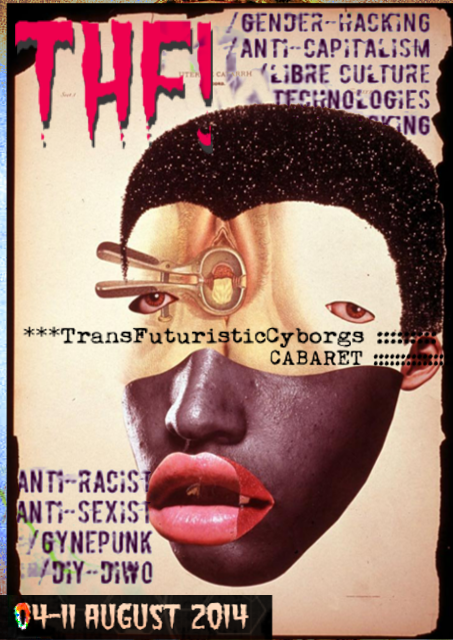
Steph Alarcon, Christina Dunbar-Hester, Tamsyn Gilbert, Seda Gurses, Jara Rocha, Femke Snelting and Sophie Toubin collaborate to examine feminism, technology and the digital.
[
extract from New Critical's exquisite corpse:]
In order to better understand the materialities of our (digital)
present world-making, a speculative crossing of four topological vectors
is proposed here for a (sintetic though) multilayered approach to the
processes of social (often soft) mattering we are involved in.
Our ethic, politic, erotic and aesthetic systems, also from a
technological point of view, are strongly affected by a dense repertory
of gestures and agencies upon which we (humans) have only a tiny
aprehension margin. This is why it might be interesting to first, when
talking about these complex systems, declare a suspension of
hierarchical cartesian judgement and storytelling (based on the
subject-object dychotomy) and perhaps try to apply what ANT scholars
have named the “principle of radical symmetry”. This will help on two
fronts: 1) test de-anthropocentrified ontologies and 2) get away of
essentialist approaches to somatic entities.
Also, and attending to the call of the
Invisible Committee to
think beyond civil liberties and go deep into the logistic composition
of both hegemonic and counter-hegemonic equipments for life, a close
look at infrastructures functioning can help us learn more about
governance of the material world. Notions of scale and standarization in
this vector are plausibly issues to deal with if an idea of autonomous
shaping and caring of infrastructures is brough upon the table.
In realtion to infrastructures, there is a third tensor that clearly
operates when dealing with power relations (in gender, class, race or
species): that of the reproductive economies. Historically invisible,
the tactics for sustainability, resilience and ultimate survival of
communities are displayed by crucial agents who/which set up the basic
conditions of possibility for life in its more radical materiality.
Following that line of thought: how about talking about reproductive
technologies in a wider sense?
Soft power is a key concept to understand relationality in our present
ecosystems. This is why the notion of extitution brought up by Serres in
Atlas can help in going beyond the inside-outside structuring of institutions and perhaps test a connected-disconnected logic.
Daniel López insightfully
proposes to think of this vector in terms of processes of
extitutionalization. This shift could be useful get rid of
pre-established forms (strong identities, social organizations,
geopolitical foldings, etc.).
What implications would it have to articulate this vectors in an
applied-to-case/situtated manner? Would it help in challenging the
imposed hegemonic regulation of social matters? Can we start practicing
critical and active
dispossession in relation to technologies?
Now, what would be the best way to identify and put into practice
the potential in each of these topological vectors and their crossings?
How can we both aprehend and be dispossessed from present
semiotic-material establishment to unfold other common-world-making
possibilities?
[the whole text can be accessed here:
http://www.newcriticals.com/exquisite-corpse/print ]


![[proyecto] Altas latencias](https://blogger.googleusercontent.com/img/a/AVvXsEiBpD8AFlYRdLzeJ2Hsn_CW_e5gS2aqI95InyU5RVD32AgQq1pu7RkVfqaIVCx8HGOvz6-KsASWhMiTRiAOeMFuq_5CdJ4oBpbugFCz27q4naB5GwKSI6367EAzmdV7gwMJ3bsY49giAjtGaszVwN6XK8Jt9TGRgsuh4UAGYJiG6-BT5M8TUcuqDBvoOME=s220)

![[txt] A breeding ground for uncertainties](https://blogger.googleusercontent.com/img/a/AVvXsEj8Ul_82KszibGV8b6jg9LFyWXEGE4qp6ecSy5BMMylXRoJD3M9p69kVu-AzxnSX2giXA1KXDQK0N-9PgDXC3iiwOb8gbekKC9_uczQKXOnaWH8az3En1ZSVefP22hPQWRvsUBccZEqf9CI15VXUsq8xboFMelx4l9oFikZJpvUX3xTe4mnAAeXwpDzIg0=s330)
![[Bugreport] to Frontier Climate](https://post.lurk.org/system/media_attachments/files/111/901/018/803/503/560/original/1075209e931cabe8.png)
![[zine] Ancho](https://blogger.googleusercontent.com/img/a/AVvXsEgxhMNpFpNTQs8-WPjqQ4xMJ3_BZJbszhAfiHl63dmkzEof-nuHBGdzLZzpneNz9vTWNnw4k1RBBRlY8Lku7gu3bPCmoB58oyB8p0m85z8G4vsPwQWrNDmDhPrcLyvW0SP8AVn6WTAkKi6967tUChbVAl73hP9Umq097rixVNbci22Ua_iZFxOiunVkTjE=s312)
![[radio] naturoculturas son disturbios](https://blogger.googleusercontent.com/img/b/R29vZ2xl/AVvXsEh1vf5WGEHGsX7aYwBLxMSY5_yPI3DzKWwCdqAOOIDKz0yFkISa81hx2ljEMCPPb6bRtYCCtoOb89SdCQET4P_BJoQeYy5990dZ2FmiqJL_Sb_ROngQphHGA9wnu3rIZyUkI7LPLNDqRXE/s220/tapiz.jpg)
![[Journal] La composición activa de la presencia](https://blogger.googleusercontent.com/img/a/AVvXsEgWJBnXgfCm300uKPAr-n4sEqPCBHxy2Hxheu2bFuYCl0IgeJCmJ_7U6SwP01cDamYTfgGpbMtgeSS6KtRm5j85_bclhQ4wn7f8DfSKu7C3_AM87wNHhELUwQ_VXIemDotxFy_h2kiZuqa1h2vLKHeMUALEg63BeR_dbpHh4Y7DEfZgKekOA0eCxPT_lJk=s320)
![[fellowship] LaaS (Life as a Service)](https://blogger.googleusercontent.com/img/a/AVvXsEijogwX9jgADqQ9A00tu8fCFaF8ARU8Sq0EXI0Z_PBE8M-SVpgMWAUiHJjw4-QwLjz-KCQlOgyvJNwpvBLe41Gr7xN0xlWzvyrGxZg9mUIH9-q3xEF51MSk6UnyUkD--ZptqoMcp7XSlgD8wV5MVeUaN8o7X34SnScuLZ4C76XyW6U8JDneHWrSw8vZ=s220)


![[associate membership] TITiPI](https://blogger.googleusercontent.com/img/a/AVvXsEjcMlj6-I_3r2L84w6kGyECKoYCgG_clIbPgkJU643pGFonPn9P-UV_qnNI3V-pjgEVFigNgse4IABpsD7WRie8evGe1jdLZOV92rg_McRtrbSIJOTVzyUW5Xx4ITTYM3JL-d90tF-XGKpKscmUYcnrts654lnj1hVbrHZUBvKA8X5pZPXL6DIoILz9=s341)
![[escuela] Elefantes en la habitación](https://blogger.googleusercontent.com/img/a/AVvXsEgg8WMXXVVHA5uHIAlHGUstKTSRhzQEhEORdROKz8QBgLMPCtYxyNIyCnuFkFwDAoixgS1XMLDeGEtm5P0cXW3AUi6AB179S0Ei6BueXW8NXbREYnik1VICivjPvl7G2Ti597fcw2OQ38cWzV0BpfG3MijQiSAzCdVmj67HS4VIiCsQV5dLgdOubMvIGiM=s220)
![[book] Volumetric regimes: material cultures of quantified presence](https://blogger.googleusercontent.com/img/a/AVvXsEgmU-TcPBoSAK-bYjc2IS1c3j6YaoY0bAmoWeJphwdAVgJ1vRcZP_dg5Ki_GWBYPakurYUpM6XIlUGJKAKALaYhdx-sLtC-KlL3NocFIq5S3RzmuefQP1pCwpUTjJ4it_itZKmY1FLZ-GuvAE1PHWP90G9nxsDRdyPVaoyQxl6s3A0SQEeRxP5fNlcI=s332)
![[manual] Queering Damage. Methodologies for partial reparation... or not.](https://blogger.googleusercontent.com/img/b/R29vZ2xl/AVvXsEj8Q0pcpgV4ta3XRYXd7_TLrE-e8iIRW9gtbF-tRh5pKQClpqaw6qbr0dUadU7sASJ9ElOlYJwy4mPROA46dn7bGeTFwAb09LCR2yMuQOkeJUCeRUrAGKai3pPb9x7nvSaISuDx8FZlppg/s1600/QD.png)

![[project] the underground division, with Helen Pritchard & Femke Snelting](https://blogger.googleusercontent.com/img/b/R29vZ2xl/AVvXsEiP7ySE_-Ag-61vgRhsOgPJOVlvsnsupcriKB9x-nxLA_XjAYdkeYSOajqqqBnnGI82iX4wCbaDfnYfAc9lSHl0ny7ES0V1xTeJl3zW0sfLto6Ardt6AiZmYZlqizeDw98sijpGLY_K1p8/s1600/unthoughtinfrastructure.gif)

![[expo] Dorm en l'accident que provoca](https://blogger.googleusercontent.com/img/a/AVvXsEgjj7ASH7edRFh6yretcviCckrs19chm_iyuaa0PyNeRqKj6EWr5C8wRAUQXNsR0rSxSIY0-j_a0z1PfmEjabITfUBWfMwqCNKLo9Fvb65P31PtSbEiBBJ_HhiNrs1iVFZsD4LWicCfvZXM20ivsPoG2XfLBZYGBhv7Iavs2VPb0uGV2mYehjf7mzdm=s220)
![[exposición] La Irrupción](https://blogger.googleusercontent.com/img/a/AVvXsEiJnQT68iCPb08I1Bq9Cq8cGWfRLxF_cwD3tqfqovDvh1oy1L-Mj5DVkBsyBEezs9ydH0kVterKMClhihz3EkJgySfauazM8-YsPZRI2qUOQKSWKE8phvjFy5lPNqE5r60m0bbgm4eyMXVA4xktKU5hrJoQ6gBv22a7QRAhFlmFDxYQVATl6orDZ-oK=s311)
![[Fellowship] Spectral Infrastructure | Cell for digital Discomfort](https://www.bakonline.org/wp-content/uploads/2021/07/Spirit-Labour-1-web-2000x1335.jpg)

![[paper] Figurations of Timely Extraction](https://blogger.googleusercontent.com/img/b/R29vZ2xl/AVvXsEheNeBTv2n__LM26gVP5_NJsH4-vssVsRn3CspeiFnoCsUY4RmKBE1dTzYurmx73Nt5hceLv_zcORBxLnGV5AR3tJnb579NJ5194ThAdnH5itHI-e9W79rOLD5_sPpkmjjGb1RT1RVnmN0/s1600/hueco.png)
![[weft] The Relearning Series (with Martino Morandi)](https://constantvzw.org/site/local/cache-vignettes/L650xH614/arton3397-dd459.png?1609926532)

![[text] The Courier Bag Praxis of Friction](https://blogger.googleusercontent.com/img/b/R29vZ2xl/AVvXsEgBtBXr6VHozr_KsHsqSJ7_sMDHSSc0l0pD4wcrZJZzqX6IUeTjQEED64R-hg4QG0lK8RHN6J6j-BtRbsTDwI-R-5OlzwcCDYPHX_q7_yTCbgnJEqPic7LsADeclTIpqgX8SWZpdXdncKs/s1600/amz.png)
![[text] We Have Always Been Geohackers](https://blogger.googleusercontent.com/img/b/R29vZ2xl/AVvXsEg3_-X1JXUAU7D1PqsbnkyLFi1PAvVb4P9ZPszvgZkaI5q5lY4JDDPsjeBScyoev-cxl3DD9ocyeaj4ROLezLzA1RM00Ib3SGeaMUiNvnhsSOtRHVy9pK2WQ4p8gXBbDqEABMiaM6uhjzk/s1600/600px-Image04.png)
![[entrevista con Nerea Ubieto] unos corpus a través de otros](https://blogger.googleusercontent.com/img/b/R29vZ2xl/AVvXsEiUAX_3sRJEwxPRY1X9jmG1DxmZBTqhXRVHN3wcA4h_oO6HNIGt9uroK9oP9ktNm79nbj0z6Kt02SNIBynmRmAbxHJa3bWPttwiF1Iffm8azfPumTmr32-pC8bQJ1cRwFvUm5QRfYjiWrs/s1600/yaaun.hotglue.me.jpeg)
![[book] Iterations](https://blogger.googleusercontent.com/img/b/R29vZ2xl/AVvXsEg6AIPpC3jitHSZRTZUAUrI-C01YGIeyM7C7ZPDO0HQhUx0nqTOyVUdpOOJBVh66ZwBJk-Z_NLtlDZtIhB5zyj7lzi1psorzemK2pJKiRk75Z8_8K60nJcdJEz1nmUZqmTm-BId_XYjINo/s1600/iterations_img.png)
![[text] Depths and Densities: a bugged report](https://blogger.googleusercontent.com/img/b/R29vZ2xl/AVvXsEj2kAiZhHGbiApkAnVW086MP8Auew-PJjqA5m1dP0C0PQTv99laH46OO1-5K5YOzYQIYBpgG4SsC8ibvqLz2fkIBoUPi3_dL6dfOir_DosCim4oY2Tq9877vFU-6SSWLfps0rLs_v3wBCM/s1600/2.gif)
![[expo] ROCK REPO](https://blogger.googleusercontent.com/img/b/R29vZ2xl/AVvXsEjMCpx4QnmsTfWUtRNlzUOhGnEWqZozBYCPkzKG3cs29OniGUqAzXFMDp4EggGvEM1B3xDC-Kf9QFHKe2EqKL6QGLhttL6FzalmkJYo8f9_aKdnmiUf61_QMaoa7F228d5farlhzSeV1Ok/s1600/ROCKREPO.png)
![[ciclo] unsupervised imaginations](https://blogger.googleusercontent.com/img/b/R29vZ2xl/AVvXsEhjO8oPteLww8zP6OPAvLXOm4uiwvBIFJ0k9DWqK7YEfSau1A9E0RdvY0-qokscG-y_a9sgou1xkCNBSw_VvBOlsFqLbcR_HSDg7K3hRB5LqkOjTdwfaCWLsemvyyt1lttyqz3zgyuzGZY/s1600/done.png)
![[texto] O o no O](https://blogger.googleusercontent.com/img/b/R29vZ2xl/AVvXsEjW0TtZQPjFHfhxlODgGdVzgg68Ac0-ARhty2p_GLpS376bYEQzPCLV3rcfveLPHTKa5NayqjcU5tkEHR1XravZ0ELvayh3Llh-dTbLDoTzqCu2-o4_XL-x7BOorECQVHzvrAbPgArKd5I/s1600/OOO.png)

![[text] testing texting South: a political fiction](https://s-media-cache-ak0.pinimg.com/236x/ee/bb/77/eebb777b79c372e431f8f01a9f8c417e.jpg)

![[texto] connivencia km 0](https://a-desk.org/wp-content/uploads/2019/02/yCNQVn7-595x356.jpg)
![[texto] tendido topológico de opacidad](https://lh3.googleusercontent.com/blogger_img_proxy/AEn0k_sCa0hN8wWtiMkNA_J3W0C-ldWTFILkJ0fTNSEbsmPCYjfUoeFLxVj74VaJHxGgmueGkhx3NC5oRgqyMMiZ-LWoLJgTmZv5YUAUJ7JbKXsN9MkHv7ocSCsJ8QEdMaBWqYoyEkpTIFls7irTiLbSmKUtudEpDkMvnoMT7IqbJrGnNg=s0-d)

![[workshop] queering damage: methodologies for partial reparations... or not](https://hangar.org/webnou/wp-content/uploads/2018/09/fotoactivitat-448x197.jpeg)
![[text] ultrasonic dreams of aclinical renderings](https://blogger.googleusercontent.com/img/b/R29vZ2xl/AVvXsEgQ0Hyf8egbRwVzEbocuGIrXelXCAPHtrkb_7qMB6MbJQpI-ImX-BnGi1Gz6BBmBUJ6ikF14F0XEdxaRvoPF8fpfA_zK2nzYx3o4fhQ_6AxTaJvn_ONeJ7kO54Ht23J4coCzwb9VNhJ7lo/s1600/ada.png)
![[text] la Caníbal Mondothèque](https://blogger.googleusercontent.com/img/b/R29vZ2xl/AVvXsEgSPEAotBhGULLOoGt7ah32WUd5Uhq7OFyBOu0HMmhi_vXY1YhVzPzfhS6z-Q9xoAUayFSZ1T875S6PzU7hLfQuqpFSffkWSElVxere3sOffMK6uJVCu6rtwjcMF7VSL8IHMqewLUaRARw/s1600/sss.png)
![[taller] Signos de desorden clandestino en la multitud uniformada y codificada](https://blogger.googleusercontent.com/img/b/R29vZ2xl/AVvXsEh2NuAewDFzlY_WN91ef8C-irr-DsGHBdEOhztzIwEqDxv-BFgccpIu7wCcZQXrhqhc6eQJBaYLJwEWSxCpoDu4WSGYO6RP2oJDte-QD2B6xGpWy5_HHAj_na47Qr4JM2x99u_CErHbcgY/s1600/signos+de+desorden.png)
![[book scanner] hackthebiblio](https://blogger.googleusercontent.com/img/b/R29vZ2xl/AVvXsEhWvEJ8bLbWXegmJmJjy0IvTFE4zHz-PQXgbVtK3YexrUu0dGq1dvhuzekD6YgOcBDJqjJiZveoMSo9EwTJAZvNK1BZXwEvnSmzPk3v-8xuJyUxgTdyjFnLSQe-AZSS7kxnFzCsoM6my74/s1600/marron.png)


![[installation] somatopologies](https://lh3.googleusercontent.com/blogger_img_proxy/AEn0k_twRclx7m8a8rzfAwfConv-fpEvSw0feJBB7QPTBwX97PzHtJYI-dE_4Eq9Q9tIzgI0gvc1DvyT3mxqWqKkNml1zWSKMIN6XQYWWlvhQ6b8NY4BUf4R8MC9nzD87lNZqI1tnci6rbKszeOkmrLrORdgVY-p69X9Ej8wKn_zYhI8f_k=s0-d)
![[workshop] ageing companions](https://blogger.googleusercontent.com/img/b/R29vZ2xl/AVvXsEgLEng19oM7Z1ABKaMNTvuNjr70o1HJvJtwCcBNQw-mN2p-j6LmAqGufemrhR2Bo_vca7ps4MYHDxpVfpbMpy3kH2pgjyrN-qal4iSVOMZBquhe2Yr3c0Qj_mWNiCAPBtceZwOQqLjwGSM/s1600/ageing+companions.png)
![[curso] ya aún (con Laura Benítez)](https://blogger.googleusercontent.com/img/b/R29vZ2xl/AVvXsEj5BUUemTv0dcKlSWxoe-95jPAn8EwoM_w0sxSEqGr2sxMN1WWY61oAFm3rkmZj-PynKmvxFGr0mu7IKZpa_mYb1AdlQoaKLXUhkTYlNXrNy-A2Zbf274hmC4iCs9pzCYl8D80VyIxTgD8/s1600/yaaun.png)
![[text] MakeHuman @ posthuman glossary](https://blogger.googleusercontent.com/img/b/R29vZ2xl/AVvXsEjAxY9qjS-hUJzSbUY4EvX-FZ6gRgbrXq0ehjWtRXZnjJvN8HEfQq1-RG8Fi-5-9JCK9DG6SNi_iod-ARLMAHWpgL9XdQFISHjvahpFJhn6dxFKMuVovjuMICweTAJV0tApChjht-ZXCVE/s1600/posthuman+gloss.jpg)
![[taller] Las promesas de los algos: una visión inapropiada/ble (con Nicolas Malevé)](https://hangar.org/webnou/wp-content/uploads/2018/01/tensorflow-448x298.jpg)
![[text] dis-orientation and its aftermath](https://media.giphy.com/media/L35lnVzYLgHFS/giphy.gif)
![[artwork] UKI, a viral game (with Shu Lea Cheang)](https://lh3.googleusercontent.com/blogger_img_proxy/AEn0k_vvFCOdtF9CUx-E3cGbufJX4G9K4wwTKA5XV9GKLlRFB01USOsDdzR7XW2WaFSnR1gItX94VU9k3ZDSnmzYkFyKxv6Mny09yzDudEjJXwD7wRIzdGKlkbkdBW71l1djwLgdTtN9dXW1cT8gHzO6vQfO-zOv2-rl=s0-d)
![[curso] fonaments del disseny](https://blogger.googleusercontent.com/img/b/R29vZ2xl/AVvXsEgD02few_onlQayFaMENECRZYVjbfJ-1BivdgWn_PntkkwCCG8jUGdswJyugFctCcFRBB3lwSXUZotFCc5EnxqfxSKywMrdfAVfBXvPsb7vcdIdr2RUowODsgri4EReXMudK_3IAStF_3w/s1600/fonaments3.jpg)
![[revista] L/EN/G/U/A/J/E/o](https://blogger.googleusercontent.com/img/b/R29vZ2xl/AVvXsEgdBBru_p5K4zK77CmgtRcK2hLubFw46lHgQqqXqJoMuEeIDJr1933trw0vcve7q3b9Mhjy96nYQDPxWYddDZ60RbtwCZcUoIYJq_F7WWd9xsnfoqhXgyZNquQLkFNbsbz7dDJoaXRZZWc/s320/Captura+de+pantalla+2017-09-10+a+la%2528s%2529+21.46.40.png)
![[methodology] workshop à la carte](https://blogger.googleusercontent.com/img/b/R29vZ2xl/AVvXsEirP91N_kdgle-XhzJxTu9qeU4rnpcG-tl-z6em-_ecKjZpIsTgRgOQn19a5SLVkW3SJ6rbkWNg7gCHdRFtXMkc4gE4OpWRGHcch_ylyVaNDjSXLkXPrRD8wf02542DxRh07xWwc54Hbxw/s1600/teo.png)
![[text] tongues in the making](https://blogger.googleusercontent.com/img/b/R29vZ2xl/AVvXsEgXl-8Ave1Yx3VqxhcrI24uG_fzX8Ohc8LNjgv8KkTq4s1W9J0LH_iVG22E22ojnNFUauSMGvN9M_JMRod7iHqahzkJMHjWvHPV0B4v1i14iRtGWNga8NmZ-LdXXlOPqAtdISnR2MQFd1Q/s1600-r/Captura+de+pantalla+2016-02-04+a+las+13.53.52.png)

![[texto] altas tensiones, saberes menores](https://lh3.googleusercontent.com/blogger_img_proxy/AEn0k_smVv6qXKz-kcrQUJSjF00L1BBeRh3nyP8KPfb-mmK23LPypNAJ26xbQzXJ5Sl5B53n6A9nd_rUN6Tm-dSnicSLKGDLxP6KBqUubeCsaMPPWEv00fOb2Xv6U9LrEfkP9DRwwDlz2Qvto_fUyeBdwP5alDWuRTL2AC4pGjgcBN4O=s0-d)
![[text] new criticals: cadavre exquis](https://lh3.googleusercontent.com/blogger_img_proxy/AEn0k_uLA9asYBPyH9S3-XTZllESOLML0z-acFoh9pEztasCf605CGt-jn4GUOD2x0-btvbrqZN933XmAmNECdjjlXWsvAiJ2cr8pW2oUlPwssapSnXjCaEj7UU6wuoGoYd-kcHsMxddfauroOUwOtT3zLoh5WfxV8_awVA=s0-d)

![[article] Let's first get things done! / Fiberculture Journal #26](https://blogger.googleusercontent.com/img/b/R29vZ2xl/AVvXsEhaDyKgtq30kos1sAGxvccGpJru0lFDJpNdr2Znui0GZq-uBP4rv7qq4wxZIHlAqGloQcjpEfhYlftguJHCfQakT3_ddO8Rs5opBTGClnrALMsSpNtDyR2ljW37LPnBtUfJ1gEO_aZqvt0/s1600-r/graph.png)
![[post] chismes del aprender](https://lh3.googleusercontent.com/-ECXXUPo6Pyyh40LLcwXtRvV95OpS-w6misVn0DL7n1jkl7tYKBDhyPVtRayTBEARSvAIFlvR0Ajv1PdHLgBIs8un7fymWjqZRhedhJiizk6HodrTJYwICBn2w)

![[paper] "La materia contraataca: una tentativa objetológica"](https://blogger.googleusercontent.com/img/b/R29vZ2xl/AVvXsEhqled-DehDpXZnTMEkO0WSjozmkdTcjnEaTT27rrnu1q69whrT275w3Hs7zzeUtLfNJXs73mXB1Q0lwJjR2AGzInb6WpEUfRFWRui5s-YhE7CAf89z1j3TDKQMAmIyDr_XF22DcA9506I/s1600-r/m%25C3%25A1quina_cuadruple+haz.jpg)
![[expo] not yet know: ontologías sorpresa y agencia-ficción](https://lh3.googleusercontent.com/blogger_img_proxy/AEn0k_vhGpUlQuGe2onG5nejaJbBUlBn3qr8WwkfN1UxMIpiJUnnqXO6QZYezLIIFgBFIB6jrQ_NLtVtwH5j9a0lfOg5JPl21MXGbPnq0-2O3msWXCAL1mIDZKT-oKkBD1I_7NzJHxAvb9tTz5ROnp6hRF81P_nYzr5rzWlkWyioSODGxYPs=s0-d)

![[libro] "El futuro de los centros culturales en la europa creativa"](https://blogger.googleusercontent.com/img/b/R29vZ2xl/AVvXsEjkwzqzUznKska3wNFn9G6GyFhyphenhyphen6v2ptsM6suKRqoeq6FUzv7Rs8mx3YQABu9QFWpj0XPZs32NhE2DNCgRSMEnnhPw4SQjSKsm1MuMrEvBDnO7z__-iWxNqt1Mn61h00R-4Co76tF7EdXY/s1600/euroz.jpg)
![[zine] catálogo restrospectivo de una soberanía objetual](http://40.media.tumblr.com/474e97cd6589b57032fbb079230ae643/tumblr_nkr05twfSL1tu5ph3o1_1280.jpg)
![[wiki] protocol for interdisciplinary research / Hangar / Grid_Spinoza](https://blogger.googleusercontent.com/img/b/R29vZ2xl/AVvXsEjmi8Df_v7kPAefpI6pLe-Xl-NhQx3VsKNEiZGO_tB1E2HCbKmQY69oI6SkN36aCFzzlI0ihwKUevFeZbmEAT-YBIGGCTfE_XlHvVbRHrnAAJS7_aCsOZW9bmeIzv1U06IVz_ik6btFPfM/s1600-r/Pantallazo.png)


![[monográfico] Laboratorios de Procomún](https://blogger.googleusercontent.com/img/b/R29vZ2xl/AVvXsEjjbDSQa0RdXhfgnejeyUgQL7ae7l7d3rC5-NoyRkrNiLiMGdo27hBA2NIiJTGDVDwkJ1JZuVh9rnQYhvbdZf8ru5Ou1W-trOX7QfMPS0h3t57HEiY3wu4CeXrWW9TfDk7VpKP6rvb17HU/s1600-r/teknokultura.png)
![[libro] Teknokultura: tecnociencia, arte y cultura](https://lh3.googleusercontent.com/blogger_img_proxy/AEn0k_vu5rdI7ozPJzoyuMcY_lPbBBvwSk4jeejnuENx2esc5_cenAAr_s9LA17RmyyYYgWyH7GL6Liz7Nje-nZ3OmFu1Oduv_ebvhMaHgJF4fYyFvgp07LMIbWUQmPyt144JtfWzZAHmTFkGNTlB_Umq53DTAwg8hwpkMG6uXiCQNYx=s0-d)