|
| oblicuo / hiedra / 1981 |
31.10.14
29.10.14


26.10.14

19.10.14

18.10.14


17.10.14
laberinto de pasiones (28O-02D)
Rubén y Jaron coordinan esta cosa tan chula que se cuenta así:
"De forma reciente hemos experimentado el resurgir de una multiplicidad de materialismos. De ciertas miradas del mundo posthumanistas que pretenden llevar el materialismo hasta sus últimas consecuencias. El interés por entender las agencias y potencias de la materia hace que nos interroguemos sobre las condiciones materiales de existencia más allá de la voluntad de los hombres y mujeres que producen su acontecer histórico. Densidades, viscosidades, resistencias, distancias y humedades se entrelazan con infraestructuras, artefactos, herramientas y tecnologías, cruzados por serotoninas, dopaminas, testosterona y feromonas, creando redes complejas que afectan y se dejan afectar. La agencia ya no reside en la voluntad sino en la densidad de las redes que integran humanos y no humanos, discursos, máquinas y animales. Esta complejización del materialismo, aceptar que no vivimos en un mundo lineal ni determista nos obliga a repensar nuestro análisis de las cosas, sobre cómo se relacionan eventos, sujetos y tecnologías, y sobre todo, sobre cómo acontecen las realidades materiales de la cultura."
+ info en la web de nociones comunes bcn
"De forma reciente hemos experimentado el resurgir de una multiplicidad de materialismos. De ciertas miradas del mundo posthumanistas que pretenden llevar el materialismo hasta sus últimas consecuencias. El interés por entender las agencias y potencias de la materia hace que nos interroguemos sobre las condiciones materiales de existencia más allá de la voluntad de los hombres y mujeres que producen su acontecer histórico. Densidades, viscosidades, resistencias, distancias y humedades se entrelazan con infraestructuras, artefactos, herramientas y tecnologías, cruzados por serotoninas, dopaminas, testosterona y feromonas, creando redes complejas que afectan y se dejan afectar. La agencia ya no reside en la voluntad sino en la densidad de las redes que integran humanos y no humanos, discursos, máquinas y animales. Esta complejización del materialismo, aceptar que no vivimos en un mundo lineal ni determista nos obliga a repensar nuestro análisis de las cosas, sobre cómo se relacionan eventos, sujetos y tecnologías, y sobre todo, sobre cómo acontecen las realidades materiales de la cultura."
+ info en la web de nociones comunes bcn


29.9.14
The Darmstadt Delegation / DL14
The darmstadt delegation came together on the basis of a shared
experience of troubling differences in the politics, values and
practices of “activists" heavily using networked technology for their
struggles, and of "techno-activists" who struggle to develop progressive
and alternative technologies. We observe that, loyal to a utopia of a
globally functioning interwebs, techno-activists usually organize around
universal values: information must be “free”, secure,
“privacy-preserving”, accessible, etc. In comparison, those who bring
their political struggles to the interwebs may express political
differences across a broader spectrum, situated in local and/or global
contexts. However, pragmatic decisions due to time pressure and lack of
resources often mean that these struggles may integrate themselves into
proprietary and conservative technical infrastructures. As a
consequence, during “sneaky moments of first getting things done", many
organizational matters are delegated to "techies" or to technological
platforms.
If we believe the mantra that our tools inform our practices and our practices inform our tools, we may want to radically reconfigure these divisions of labor between “activists” and “progressive techies". But how? Where do we start? What are ways to resist those sneaky moments in which we pragmatically submit ourselves to "specialization of work" that reproduce hegemonic divisions of gender, race, class and age, and that reinforce ideological differences between activists for social justice and activists for just technologies?
The darmstadt delegation follows in the steps of numerous initiatives which are working on crossing divides while developing technical alternatives for current day struggles. Most recently, we see ourselves in conversation with the numerous initiatives that have aligned around backbone409 [1], interference [2], transhackfeminist camp [3] and the internet ungovernance forum [4]. We are excited to have the opportunity to continue some of these conversations with you in the context of DL14 [5]. Due to unforeseen constraints, only Seda Gurses will be physically present at the conference. For those who would like to discuss more, I encourage you to get in touch with all of our delegates [0]

[0] Currently active delegates are Femke Snelting (ConstantVZW, Belgium), Jara Rocha(Objetologias, Bau School of Design, Spain), Miriyam Aouragh (University of Westminister, UK) and Seda Gurses (New York University, USA).
[1] http://backbone409.calafou.org
[2] http://interference.io
[3] http://transhackfeminist.
[4] https://iuf.alternatifbilisim.
[5] http://digitallabor.org/
If we believe the mantra that our tools inform our practices and our practices inform our tools, we may want to radically reconfigure these divisions of labor between “activists” and “progressive techies". But how? Where do we start? What are ways to resist those sneaky moments in which we pragmatically submit ourselves to "specialization of work" that reproduce hegemonic divisions of gender, race, class and age, and that reinforce ideological differences between activists for social justice and activists for just technologies?
The darmstadt delegation follows in the steps of numerous initiatives which are working on crossing divides while developing technical alternatives for current day struggles. Most recently, we see ourselves in conversation with the numerous initiatives that have aligned around backbone409 [1], interference [2], transhackfeminist camp [3] and the internet ungovernance forum [4]. We are excited to have the opportunity to continue some of these conversations with you in the context of DL14 [5]. Due to unforeseen constraints, only Seda Gurses will be physically present at the conference. For those who would like to discuss more, I encourage you to get in touch with all of our delegates [0]
[0] Currently active delegates are Femke Snelting (ConstantVZW, Belgium), Jara Rocha(Objetologias, Bau School of Design, Spain), Miriyam Aouragh (University of Westminister, UK) and Seda Gurses (New York University, USA).
[1] http://backbone409.calafou.org
[2] http://interference.io
[3] http://transhackfeminist.
[4] https://iuf.alternatifbilisim.
[5] http://digitallabor.org/
28.9.14


26.9.14


25.9.14

18.9.14
14.9.14

11.9.14
3.9.14

2.9.14

26.8.14
UKI
[UKI - viral game - an intro by shu Lea Cheang on Vimeo]
> he encontrado ésto, que es de hace ya un rato, y me ha enternecido mucho
+ info en la web de entonces
3.8.14
THF!
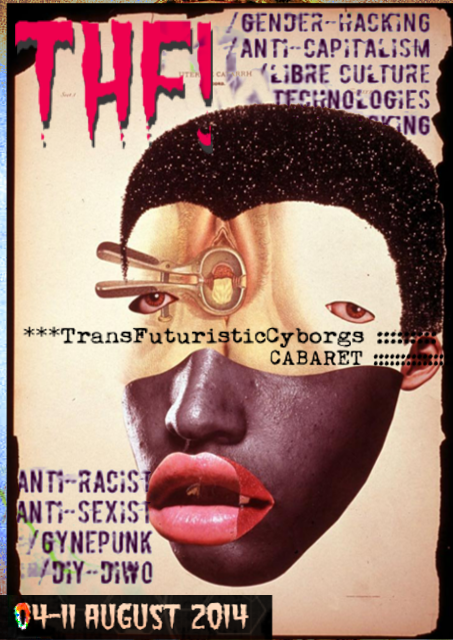
T H Ffeminist
convergencia trans
gente de todos los géneros
disentir socialmente
piratas guerrilla punto
eclectic tech carnival
genderhacking
convergencia trans
gente de todos los géneros
disentir socialmente
piratas guerrilla punto
eclectic tech carnival
genderhacking
del 4 al 11 de agosto
+ info aquí + aquí + aquí
1.8.14

31.7.14

25.7.14

24.7.14
images of the world and the inscription of
"Mundo autónomo, o sea, con leyes propias, con contradicciones propias,
donde la exigencia es alegre y la paciencia duradera, donde aún no te
has recuperado de la frase que acabas de escuchar cuando llega el
siguiente golpe, la siguiente idea o emoción, idea y emoción, que tanta
generosidad quepa en un par de cuerpos y que comprendamos, al mismo
tiempo, que ciertas cosas no pueden enseñarse, sólo pueden aprenderse." (de Miriam Martín sobre Où gît votre sourire enfoui?, Pedro Costa, 2001)


17.7.14
let’s first get things done
: on division of labor and practices of delegation in times of mediated politics and politicized technologies
4th of August, 2014
Thinking together / Osthang Project
Darmstadt, Germany
"How can we live together? This is the very simple and fun (if not challenging) question that the participants of the Osthang Architecture Summer School will be asking this Summer in Darmstadt, Germany. The program will come to a closure with a nine day(!) public forum titled “thinking together” curated by Berno Odo Polzer. As Berno writes:
Together with Seda Gürses, Femke Snelting & Miriyam Aouragh
+ info on Thinking together here
4th of August, 2014
Thinking together / Osthang Project
Darmstadt, Germany
"How can we live together? This is the very simple and fun (if not challenging) question that the participants of the Osthang Architecture Summer School will be asking this Summer in Darmstadt, Germany. The program will come to a closure with a nine day(!) public forum titled “thinking together” curated by Berno Odo Polzer. As Berno writes:
“«Thinking Together» is focused on rethinking future modes of living together in a pluricentric world, so it is a transdisciplinary platform for political imagination: ‘political’ because it is concerned with the way in which we organize the spaces, practices and lives that we share, locally as well as globally – ‘imagination’ because it is aimed at forming new ideas and imaginaries about how to do so.”
Be it in
getting out the call for the next demonstration on some “cloud
service”, or developing a progressive tech project in the name of an
imagined user community, scarcity of resources and distribution of
expertise makes short cuts inevitable. But do they really?


The
current distance between those who organise their activism to develop
“technical infrastructures” and those who bring their struggles to these
infrastructures is remarkable. The paradoxical consequences can be
baffling: (radical) activists organize and sustain themselves using
“free” technical services provided by Fortune 500 companies. At the same
time, “alternative tech practices”, like the Free Software Community,
are sustained by a select (visionary and male) few, proposing crypto
with 9-lives as the minimum infrastructure for any political
undertaking.
The
naturalization of this division of labor may be recognized in statements
about activists having better things to do than to tinker with code or
hardware, or in technological projects that locate their politics solely
in the technology and infrastructures as if they are outside of the
social and political domain. What may seem like a pragmatic solution
actually re-iterates faultlines of race, gender, age and class. Through
the convenient delegation of “tech matters” to the techies or to
commercial services, collectives may experience a shift in the
collective’s priorities and a reframing of their activist culture
through technological decisions. The latter, however, are typically not
open to a broader political discussion and contestation. Such separation
also gets in the way of actively considering the way in which changes
in our political realities are entangled with shifts in technological
infrastructures.
We want
to use this day to resist the reflex of “first getting things done” in
order to start a long term collaboration that intersects those of us
with a background in politics of society and politics of technology." (Seda Gürses)
Together with Seda Gürses, Femke Snelting & Miriyam Aouragh
+ info on Thinking together here

9.7.14
publicación: Teknokultura "entre dos siglos"
"Este libro reúne una selección de los trabajos publicados en la revista digital Teknokultura
en conmemoración de sus trece años de existencia. Los textos incluidos
en esta “antología” muestran la diversidad de temas, cuestionamientos y
debates que Teknokultura ha albergado y fomentado desde su
aparición en 2001. Se han quedado fuera muchos otros también importantes
que forman parte del esfuerzo de crear un foro de discusión sobre
asuntos de tecnología que deje de una vez por todas de concentrarse en
el aparato y el estrecho ámbito de sus usos particulares para atender
las maneras complejas en las que la tecnología como sistemas de
significación reestructura la vida social, económica, política y
cultural. Invitamos al lector a transitar por estas páginas con la
expectativa de suscitar suficientes inquietudes como para continuar la
discusión, así como acción política y social más allá de ellas."

+ info: catarata.org

Textos: Heidi J. Figueroa Sarriera, Ángel Gordo, Javier de Rivera (comps.), Steffen P. Walz, Barbara Bolt, Langdon Winner, Steven Mentor, Andy Miah, Adolfo Estalella, Antonio Lafuente, Jara Rocha, Luis Moreno-Caballud y Remedios Zafra
+ info: catarata.org
4.7.14
gendered Turing tests and strategies for concealing and identifying gender online

"In the prelude to How We Became Posthuman, N. Katherine Hayles describes two different variations on the Turing test. The most famous one, the one many of us may know, involves a person using some kind of computerized chat interface to talk to either a computer, or a human in another room. It is the task of the test subject to determine, from conversation, whether their interlocutor is human or machine. Passing the Turing test has long been seen as one of the holy grails of artificial intelligence. When computers are able to pass as human, the argument goes, one of the distinctions between humans and computers dissolves.
Hayles also describes another Turing test. This one starts in the same way as the previous, with a human participant talking to someone in another room through a computerized chat interface. But in this one, the discussion partner on the other side is definitely human. The goal of the participant is, instead, to determine whether their conversation partner is male or female. If this second Turing test has similar stakes to the first, Hayles asks, does an ability to fool the participant negate the gender of the human on the other side? (...)
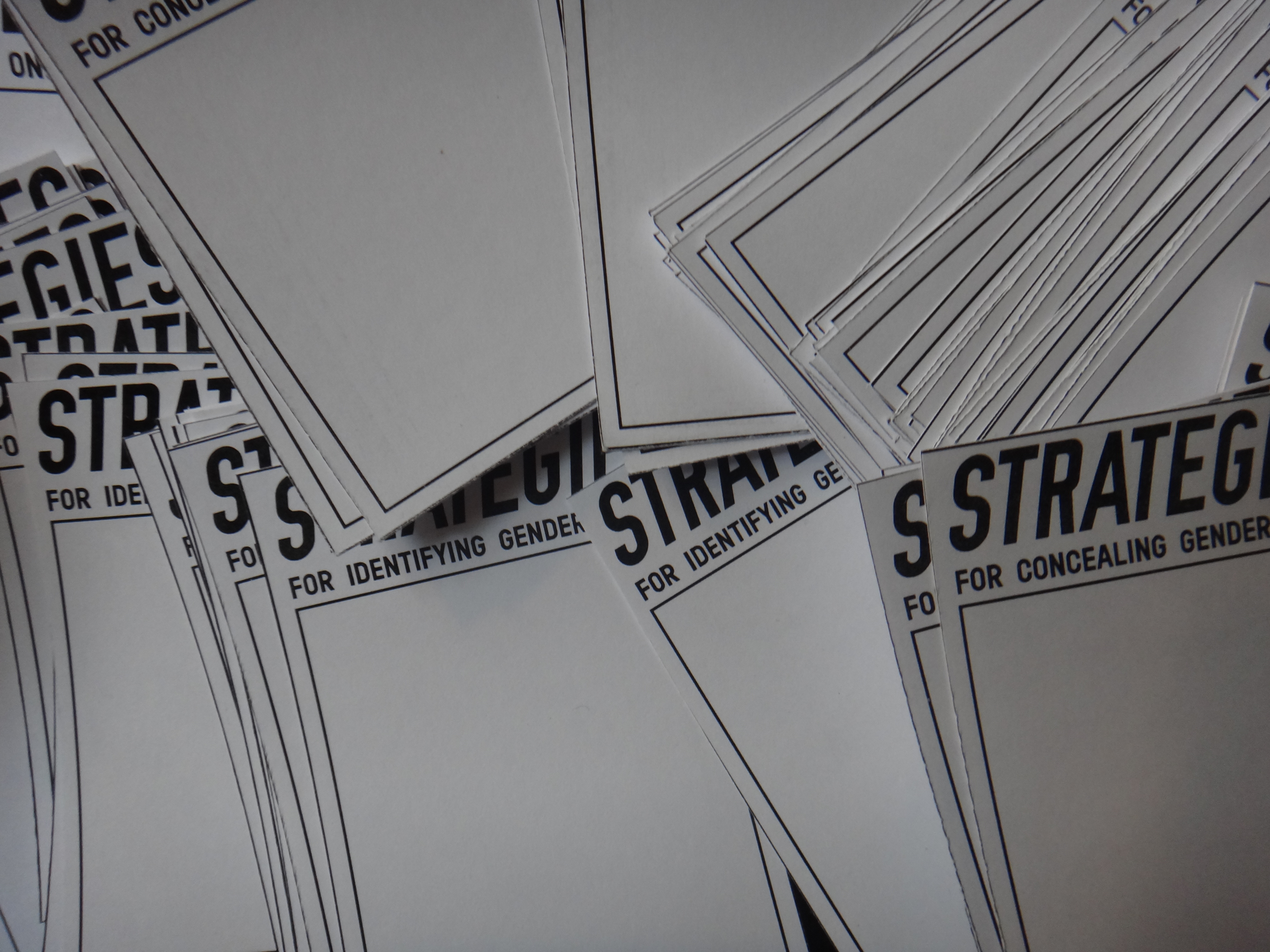
There's a huge spectrum of ways that gender is represented, discussed, made an issue, or turned into infrastructure on the internet. Different platforms construct gender as an issue of varying importance. In some software development communities (on mailing lists, in IRC), it's generally considered impolite to ask people for personal details that they're not readily volunteering. A comment raised by this is the idea that many women don't get noticed or counted because they don't mention or make obvious their gender, because the default or un-gendered stated is considered to be male. If someone does not make it explicitly clear that she is a woman, she is assumed to be a man. If someone makes it explicitly clear that they are something other than simply a woman or man, it starts a discussion, which may or may not be welcome to the person who has accidentally instigated it. So on one side of this spectrum, there's communities where disclosing gender is not structurally necessary and speculation is entirely a private activity by individuals; on the other side of the spectrum, there are platforms like Facebook, where including a gender is a required activity in profile building, and where the default is man or woman, unless you choose to start writing in an answer, and then there's an authorized list of possibilities. Gender is built into the bedrock of Facebook. We take for granted that we can find out what gender someone is on Facebook. Moreso, we take for granted that we can find out what gender someone is, in general."
+info: http://www.constantvzw.org/site/Gendered-Turing-tests.html


27.6.14
Unlinked (dislocations, disappearances & deprecations) - 2014's MMD&C finnisage at Piet Zwart
This year’s graduation show of the Piet Zwart Institute’s Master of Media Design & Communication: Networked & Lens-Based perhaps reflects a shift in popular culture. Whereas no self-respecting media self-help book or newspaper article published in the last decade missed using ‘linked’ or ‘stay connected’ in the text several times, a more recent rash of articles and runaway best-sellers feature words such as ‘introvert’ or ‘silence’. Have we reached a consensual moment where we might all agree it has become urgently necessary to critically look at how the words ‘social’ and ‘media’ might be used together? Is it becoming increasingly pressing to explore how contemporary media forms pervasive networks of both communication and mis-communication? To look at how media can foster community yet also create isolation and foster loneliness?
Each project reflects a unique research trajectory over two years: each artist has developed a unique media language through which they have researched particular topics and then – through a cycle of studio-based practice and critical reflection – have created the artworks and research projects you will find in this show: works about dislocation, disappearance & deprecation.

Graduating Master MMD&C students: Roel Roscam Abbing, Yoana Buzova, Lasse van den Bosch Christensen, Marlon Harder, Menno Harder, Nicole Hametner, Niek Hilkmann, Michaela Lakova, Nan Wang.
- Tuesday June 24: the first year students present two events. The Art of Documentation from 17:30 to 18:30 in the WORM filmzaal, followed by Politics of Craft in V2_, which opens at 19:00 and continues until 29 june.
- Saturday June 14 and 18: VHS Anatomy Workshop with Niek Hilkmann, at TENT
- Sunday June 29: the finnisage of Unlinked from 15:00 to 18:00 in TENT, features a launch of the graduation catalogue, a concert by Niek Hilkmann and a performance by Nan Wang.
+info: http://pzwart.nl/pzi/News/Nieuwspagina/?article=2173

10.6.14
la materia contraataca

I Jornada de Objetologías, en Bau (Pujades, 118 - Barcelona)
+ info sobre el coso aquí
+ info sobre el sarao acá
21.4.14

Suscribirse a:
Entradas (Atom)
![[proyecto] Altas latencias](https://blogger.googleusercontent.com/img/a/AVvXsEiBpD8AFlYRdLzeJ2Hsn_CW_e5gS2aqI95InyU5RVD32AgQq1pu7RkVfqaIVCx8HGOvz6-KsASWhMiTRiAOeMFuq_5CdJ4oBpbugFCz27q4naB5GwKSI6367EAzmdV7gwMJ3bsY49giAjtGaszVwN6XK8Jt9TGRgsuh4UAGYJiG6-BT5M8TUcuqDBvoOME=s220)

![[txt] A breeding ground for uncertainties](https://blogger.googleusercontent.com/img/a/AVvXsEj8Ul_82KszibGV8b6jg9LFyWXEGE4qp6ecSy5BMMylXRoJD3M9p69kVu-AzxnSX2giXA1KXDQK0N-9PgDXC3iiwOb8gbekKC9_uczQKXOnaWH8az3En1ZSVefP22hPQWRvsUBccZEqf9CI15VXUsq8xboFMelx4l9oFikZJpvUX3xTe4mnAAeXwpDzIg0=s330)
![[Bugreport] to Frontier Climate](https://post.lurk.org/system/media_attachments/files/111/901/018/803/503/560/original/1075209e931cabe8.png)
![[zine] Ancho](https://blogger.googleusercontent.com/img/a/AVvXsEgxhMNpFpNTQs8-WPjqQ4xMJ3_BZJbszhAfiHl63dmkzEof-nuHBGdzLZzpneNz9vTWNnw4k1RBBRlY8Lku7gu3bPCmoB58oyB8p0m85z8G4vsPwQWrNDmDhPrcLyvW0SP8AVn6WTAkKi6967tUChbVAl73hP9Umq097rixVNbci22Ua_iZFxOiunVkTjE=s312)
![[radio] naturoculturas son disturbios](https://blogger.googleusercontent.com/img/b/R29vZ2xl/AVvXsEh1vf5WGEHGsX7aYwBLxMSY5_yPI3DzKWwCdqAOOIDKz0yFkISa81hx2ljEMCPPb6bRtYCCtoOb89SdCQET4P_BJoQeYy5990dZ2FmiqJL_Sb_ROngQphHGA9wnu3rIZyUkI7LPLNDqRXE/s220/tapiz.jpg)
![[Journal] La composición activa de la presencia](https://blogger.googleusercontent.com/img/a/AVvXsEgWJBnXgfCm300uKPAr-n4sEqPCBHxy2Hxheu2bFuYCl0IgeJCmJ_7U6SwP01cDamYTfgGpbMtgeSS6KtRm5j85_bclhQ4wn7f8DfSKu7C3_AM87wNHhELUwQ_VXIemDotxFy_h2kiZuqa1h2vLKHeMUALEg63BeR_dbpHh4Y7DEfZgKekOA0eCxPT_lJk=s320)
![[fellowship] LaaS (Life as a Service)](https://blogger.googleusercontent.com/img/a/AVvXsEijogwX9jgADqQ9A00tu8fCFaF8ARU8Sq0EXI0Z_PBE8M-SVpgMWAUiHJjw4-QwLjz-KCQlOgyvJNwpvBLe41Gr7xN0xlWzvyrGxZg9mUIH9-q3xEF51MSk6UnyUkD--ZptqoMcp7XSlgD8wV5MVeUaN8o7X34SnScuLZ4C76XyW6U8JDneHWrSw8vZ=s220)


![[associate membership] TITiPI](https://blogger.googleusercontent.com/img/a/AVvXsEjcMlj6-I_3r2L84w6kGyECKoYCgG_clIbPgkJU643pGFonPn9P-UV_qnNI3V-pjgEVFigNgse4IABpsD7WRie8evGe1jdLZOV92rg_McRtrbSIJOTVzyUW5Xx4ITTYM3JL-d90tF-XGKpKscmUYcnrts654lnj1hVbrHZUBvKA8X5pZPXL6DIoILz9=s341)
![[escuela] Elefantes en la habitación](https://blogger.googleusercontent.com/img/a/AVvXsEgg8WMXXVVHA5uHIAlHGUstKTSRhzQEhEORdROKz8QBgLMPCtYxyNIyCnuFkFwDAoixgS1XMLDeGEtm5P0cXW3AUi6AB179S0Ei6BueXW8NXbREYnik1VICivjPvl7G2Ti597fcw2OQ38cWzV0BpfG3MijQiSAzCdVmj67HS4VIiCsQV5dLgdOubMvIGiM=s220)
![[book] Volumetric regimes: material cultures of quantified presence](https://blogger.googleusercontent.com/img/a/AVvXsEgmU-TcPBoSAK-bYjc2IS1c3j6YaoY0bAmoWeJphwdAVgJ1vRcZP_dg5Ki_GWBYPakurYUpM6XIlUGJKAKALaYhdx-sLtC-KlL3NocFIq5S3RzmuefQP1pCwpUTjJ4it_itZKmY1FLZ-GuvAE1PHWP90G9nxsDRdyPVaoyQxl6s3A0SQEeRxP5fNlcI=s332)
![[manual] Queering Damage. Methodologies for partial reparation... or not.](https://blogger.googleusercontent.com/img/b/R29vZ2xl/AVvXsEj8Q0pcpgV4ta3XRYXd7_TLrE-e8iIRW9gtbF-tRh5pKQClpqaw6qbr0dUadU7sASJ9ElOlYJwy4mPROA46dn7bGeTFwAb09LCR2yMuQOkeJUCeRUrAGKai3pPb9x7nvSaISuDx8FZlppg/s1600/QD.png)

![[project] the underground division, with Helen Pritchard & Femke Snelting](https://blogger.googleusercontent.com/img/b/R29vZ2xl/AVvXsEiP7ySE_-Ag-61vgRhsOgPJOVlvsnsupcriKB9x-nxLA_XjAYdkeYSOajqqqBnnGI82iX4wCbaDfnYfAc9lSHl0ny7ES0V1xTeJl3zW0sfLto6Ardt6AiZmYZlqizeDw98sijpGLY_K1p8/s1600/unthoughtinfrastructure.gif)

![[expo] Dorm en l'accident que provoca](https://blogger.googleusercontent.com/img/a/AVvXsEgjj7ASH7edRFh6yretcviCckrs19chm_iyuaa0PyNeRqKj6EWr5C8wRAUQXNsR0rSxSIY0-j_a0z1PfmEjabITfUBWfMwqCNKLo9Fvb65P31PtSbEiBBJ_HhiNrs1iVFZsD4LWicCfvZXM20ivsPoG2XfLBZYGBhv7Iavs2VPb0uGV2mYehjf7mzdm=s220)
![[exposición] La Irrupción](https://blogger.googleusercontent.com/img/a/AVvXsEiJnQT68iCPb08I1Bq9Cq8cGWfRLxF_cwD3tqfqovDvh1oy1L-Mj5DVkBsyBEezs9ydH0kVterKMClhihz3EkJgySfauazM8-YsPZRI2qUOQKSWKE8phvjFy5lPNqE5r60m0bbgm4eyMXVA4xktKU5hrJoQ6gBv22a7QRAhFlmFDxYQVATl6orDZ-oK=s311)
![[Fellowship] Spectral Infrastructure | Cell for digital Discomfort](https://www.bakonline.org/wp-content/uploads/2021/07/Spirit-Labour-1-web-2000x1335.jpg)

![[paper] Figurations of Timely Extraction](https://blogger.googleusercontent.com/img/b/R29vZ2xl/AVvXsEheNeBTv2n__LM26gVP5_NJsH4-vssVsRn3CspeiFnoCsUY4RmKBE1dTzYurmx73Nt5hceLv_zcORBxLnGV5AR3tJnb579NJ5194ThAdnH5itHI-e9W79rOLD5_sPpkmjjGb1RT1RVnmN0/s1600/hueco.png)
![[weft] The Relearning Series (with Martino Morandi)](https://constantvzw.org/site/local/cache-vignettes/L650xH614/arton3397-dd459.png?1609926532)

![[text] The Courier Bag Praxis of Friction](https://blogger.googleusercontent.com/img/b/R29vZ2xl/AVvXsEgBtBXr6VHozr_KsHsqSJ7_sMDHSSc0l0pD4wcrZJZzqX6IUeTjQEED64R-hg4QG0lK8RHN6J6j-BtRbsTDwI-R-5OlzwcCDYPHX_q7_yTCbgnJEqPic7LsADeclTIpqgX8SWZpdXdncKs/s1600/amz.png)
![[text] We Have Always Been Geohackers](https://blogger.googleusercontent.com/img/b/R29vZ2xl/AVvXsEg3_-X1JXUAU7D1PqsbnkyLFi1PAvVb4P9ZPszvgZkaI5q5lY4JDDPsjeBScyoev-cxl3DD9ocyeaj4ROLezLzA1RM00Ib3SGeaMUiNvnhsSOtRHVy9pK2WQ4p8gXBbDqEABMiaM6uhjzk/s1600/600px-Image04.png)
![[entrevista con Nerea Ubieto] unos corpus a través de otros](https://blogger.googleusercontent.com/img/b/R29vZ2xl/AVvXsEiUAX_3sRJEwxPRY1X9jmG1DxmZBTqhXRVHN3wcA4h_oO6HNIGt9uroK9oP9ktNm79nbj0z6Kt02SNIBynmRmAbxHJa3bWPttwiF1Iffm8azfPumTmr32-pC8bQJ1cRwFvUm5QRfYjiWrs/s1600/yaaun.hotglue.me.jpeg)
![[book] Iterations](https://blogger.googleusercontent.com/img/b/R29vZ2xl/AVvXsEg6AIPpC3jitHSZRTZUAUrI-C01YGIeyM7C7ZPDO0HQhUx0nqTOyVUdpOOJBVh66ZwBJk-Z_NLtlDZtIhB5zyj7lzi1psorzemK2pJKiRk75Z8_8K60nJcdJEz1nmUZqmTm-BId_XYjINo/s1600/iterations_img.png)
![[text] Depths and Densities: a bugged report](https://blogger.googleusercontent.com/img/b/R29vZ2xl/AVvXsEj2kAiZhHGbiApkAnVW086MP8Auew-PJjqA5m1dP0C0PQTv99laH46OO1-5K5YOzYQIYBpgG4SsC8ibvqLz2fkIBoUPi3_dL6dfOir_DosCim4oY2Tq9877vFU-6SSWLfps0rLs_v3wBCM/s1600/2.gif)
![[expo] ROCK REPO](https://blogger.googleusercontent.com/img/b/R29vZ2xl/AVvXsEjMCpx4QnmsTfWUtRNlzUOhGnEWqZozBYCPkzKG3cs29OniGUqAzXFMDp4EggGvEM1B3xDC-Kf9QFHKe2EqKL6QGLhttL6FzalmkJYo8f9_aKdnmiUf61_QMaoa7F228d5farlhzSeV1Ok/s1600/ROCKREPO.png)
![[ciclo] unsupervised imaginations](https://blogger.googleusercontent.com/img/b/R29vZ2xl/AVvXsEhjO8oPteLww8zP6OPAvLXOm4uiwvBIFJ0k9DWqK7YEfSau1A9E0RdvY0-qokscG-y_a9sgou1xkCNBSw_VvBOlsFqLbcR_HSDg7K3hRB5LqkOjTdwfaCWLsemvyyt1lttyqz3zgyuzGZY/s1600/done.png)
![[texto] O o no O](https://blogger.googleusercontent.com/img/b/R29vZ2xl/AVvXsEjW0TtZQPjFHfhxlODgGdVzgg68Ac0-ARhty2p_GLpS376bYEQzPCLV3rcfveLPHTKa5NayqjcU5tkEHR1XravZ0ELvayh3Llh-dTbLDoTzqCu2-o4_XL-x7BOorECQVHzvrAbPgArKd5I/s1600/OOO.png)

![[text] testing texting South: a political fiction](https://s-media-cache-ak0.pinimg.com/236x/ee/bb/77/eebb777b79c372e431f8f01a9f8c417e.jpg)

![[texto] connivencia km 0](https://a-desk.org/wp-content/uploads/2019/02/yCNQVn7-595x356.jpg)
![[texto] tendido topológico de opacidad](https://lh3.googleusercontent.com/blogger_img_proxy/AEn0k_u3jBXVoz6EkkDRUNulTdP5diVhA5_P41AxYEu1WGdkZZMb7geVY8U59wr-e3KnQJpSJXpdotzC1SHLw9pNw9MPEBLyECrLl1Lzi346PnrB5pNDeh431jkjLTF-AyxEr_ODc9K1b_GR_yNIJC1qJcQRtn_dA2wxL7MUAI3FFa39VQ=s0-d)

![[workshop] queering damage: methodologies for partial reparations... or not](https://hangar.org/webnou/wp-content/uploads/2018/09/fotoactivitat-448x197.jpeg)
![[text] ultrasonic dreams of aclinical renderings](https://blogger.googleusercontent.com/img/b/R29vZ2xl/AVvXsEgQ0Hyf8egbRwVzEbocuGIrXelXCAPHtrkb_7qMB6MbJQpI-ImX-BnGi1Gz6BBmBUJ6ikF14F0XEdxaRvoPF8fpfA_zK2nzYx3o4fhQ_6AxTaJvn_ONeJ7kO54Ht23J4coCzwb9VNhJ7lo/s1600/ada.png)
![[text] la Caníbal Mondothèque](https://blogger.googleusercontent.com/img/b/R29vZ2xl/AVvXsEgSPEAotBhGULLOoGt7ah32WUd5Uhq7OFyBOu0HMmhi_vXY1YhVzPzfhS6z-Q9xoAUayFSZ1T875S6PzU7hLfQuqpFSffkWSElVxere3sOffMK6uJVCu6rtwjcMF7VSL8IHMqewLUaRARw/s1600/sss.png)
![[taller] Signos de desorden clandestino en la multitud uniformada y codificada](https://blogger.googleusercontent.com/img/b/R29vZ2xl/AVvXsEh2NuAewDFzlY_WN91ef8C-irr-DsGHBdEOhztzIwEqDxv-BFgccpIu7wCcZQXrhqhc6eQJBaYLJwEWSxCpoDu4WSGYO6RP2oJDte-QD2B6xGpWy5_HHAj_na47Qr4JM2x99u_CErHbcgY/s1600/signos+de+desorden.png)
![[book scanner] hackthebiblio](https://blogger.googleusercontent.com/img/b/R29vZ2xl/AVvXsEhWvEJ8bLbWXegmJmJjy0IvTFE4zHz-PQXgbVtK3YexrUu0dGq1dvhuzekD6YgOcBDJqjJiZveoMSo9EwTJAZvNK1BZXwEvnSmzPk3v-8xuJyUxgTdyjFnLSQe-AZSS7kxnFzCsoM6my74/s1600/marron.png)


![[installation] somatopologies](https://lh3.googleusercontent.com/blogger_img_proxy/AEn0k_sl4NA0vVnzTKXinCtQvFkfCTU32z_U6w6e7zoBahPVO7_sJDkBOLx6q8unJNfXvlPuCVhPux6p_mDA_JZQJys_ags26jKcp3jUuY7bnXAp9mFU8kzsHP21Vgv1nrj8bM9nwFMPykrk2uqHA8vRZ_mERrOb2ujaFYShs_fVQphkUFo=s0-d)
![[workshop] ageing companions](https://blogger.googleusercontent.com/img/b/R29vZ2xl/AVvXsEgLEng19oM7Z1ABKaMNTvuNjr70o1HJvJtwCcBNQw-mN2p-j6LmAqGufemrhR2Bo_vca7ps4MYHDxpVfpbMpy3kH2pgjyrN-qal4iSVOMZBquhe2Yr3c0Qj_mWNiCAPBtceZwOQqLjwGSM/s1600/ageing+companions.png)
![[curso] ya aún (con Laura Benítez)](https://blogger.googleusercontent.com/img/b/R29vZ2xl/AVvXsEj5BUUemTv0dcKlSWxoe-95jPAn8EwoM_w0sxSEqGr2sxMN1WWY61oAFm3rkmZj-PynKmvxFGr0mu7IKZpa_mYb1AdlQoaKLXUhkTYlNXrNy-A2Zbf274hmC4iCs9pzCYl8D80VyIxTgD8/s1600/yaaun.png)
![[text] MakeHuman @ posthuman glossary](https://blogger.googleusercontent.com/img/b/R29vZ2xl/AVvXsEjAxY9qjS-hUJzSbUY4EvX-FZ6gRgbrXq0ehjWtRXZnjJvN8HEfQq1-RG8Fi-5-9JCK9DG6SNi_iod-ARLMAHWpgL9XdQFISHjvahpFJhn6dxFKMuVovjuMICweTAJV0tApChjht-ZXCVE/s1600/posthuman+gloss.jpg)
![[taller] Las promesas de los algos: una visión inapropiada/ble (con Nicolas Malevé)](https://hangar.org/webnou/wp-content/uploads/2018/01/tensorflow-448x298.jpg)

![[text] dis-orientation and its aftermath](https://media.giphy.com/media/L35lnVzYLgHFS/giphy.gif)
![[artwork] UKI, a viral game (with Shu Lea Cheang)](https://lh3.googleusercontent.com/blogger_img_proxy/AEn0k_uVbbQCKMEYniGSrp_HV1hOiB7ClyFMS_0tsVO4CQpAVyN4M4zDLsVw4eYsnqSbYbBkR7eMu9_OPFcTczn-848PVEKPnJF1bNiw23U2ltZnhW-q3BdWHJV5sUYLfwGqL3U-dlUVtZmmIQr8uLzO5DnANrv1nsPi=s0-d)
![[curso] fonaments del disseny](https://blogger.googleusercontent.com/img/b/R29vZ2xl/AVvXsEgD02few_onlQayFaMENECRZYVjbfJ-1BivdgWn_PntkkwCCG8jUGdswJyugFctCcFRBB3lwSXUZotFCc5EnxqfxSKywMrdfAVfBXvPsb7vcdIdr2RUowODsgri4EReXMudK_3IAStF_3w/s1600/fonaments3.jpg)
![[revista] L/EN/G/U/A/J/E/o](https://blogger.googleusercontent.com/img/b/R29vZ2xl/AVvXsEgdBBru_p5K4zK77CmgtRcK2hLubFw46lHgQqqXqJoMuEeIDJr1933trw0vcve7q3b9Mhjy96nYQDPxWYddDZ60RbtwCZcUoIYJq_F7WWd9xsnfoqhXgyZNquQLkFNbsbz7dDJoaXRZZWc/s320/Captura+de+pantalla+2017-09-10+a+la%2528s%2529+21.46.40.png)
![[methodology] workshop à la carte](https://blogger.googleusercontent.com/img/b/R29vZ2xl/AVvXsEirP91N_kdgle-XhzJxTu9qeU4rnpcG-tl-z6em-_ecKjZpIsTgRgOQn19a5SLVkW3SJ6rbkWNg7gCHdRFtXMkc4gE4OpWRGHcch_ylyVaNDjSXLkXPrRD8wf02542DxRh07xWwc54Hbxw/s1600/teo.png)
![[text] tongues in the making](https://blogger.googleusercontent.com/img/b/R29vZ2xl/AVvXsEgXl-8Ave1Yx3VqxhcrI24uG_fzX8Ohc8LNjgv8KkTq4s1W9J0LH_iVG22E22ojnNFUauSMGvN9M_JMRod7iHqahzkJMHjWvHPV0B4v1i14iRtGWNga8NmZ-LdXXlOPqAtdISnR2MQFd1Q/s1600-r/Captura+de+pantalla+2016-02-04+a+las+13.53.52.png)

![[texto] altas tensiones, saberes menores](https://lh3.googleusercontent.com/blogger_img_proxy/AEn0k_vToFSZgskN0mXBx3Tgj5Ry_qMFg2MJEfESpTSrqXwL9T0cWQKbkEId_F0DeIbO2YQn1UKI6U1BQYb_jrrofFvbiSHMURVLDjpNZpgfBSKIIJlVuny823SCWvVj4hVOwv3iNrvgpNwEP1r48DuZEmT28inx6dxABiymm8FYVTky=s0-d)
![[text] new criticals: cadavre exquis](https://lh3.googleusercontent.com/blogger_img_proxy/AEn0k_tFBAf0f7oooA8co5e1INfahyVYX7_7C6upT8iGhEee_9cqBtMNvlTxh2Zo1On7qtOFAHWvxrltrCERDVOZyvwiK9Er-I-KNbio-ziYBClLa3BXaeH3PutNZzRC_QunmVPrhYN4kAGBKRdj_9Qs3dbOWJmUNo9I-mk=s0-d)

![[article] Let's first get things done! / Fiberculture Journal #26](https://blogger.googleusercontent.com/img/b/R29vZ2xl/AVvXsEhaDyKgtq30kos1sAGxvccGpJru0lFDJpNdr2Znui0GZq-uBP4rv7qq4wxZIHlAqGloQcjpEfhYlftguJHCfQakT3_ddO8Rs5opBTGClnrALMsSpNtDyR2ljW37LPnBtUfJ1gEO_aZqvt0/s1600-r/graph.png)
![[post] chismes del aprender](https://lh3.googleusercontent.com/-ECXXUPo6Pyyh40LLcwXtRvV95OpS-w6misVn0DL7n1jkl7tYKBDhyPVtRayTBEARSvAIFlvR0Ajv1PdHLgBIs8un7fymWjqZRhedhJiizk6HodrTJYwICBn2w)

![[paper] "La materia contraataca: una tentativa objetológica"](https://blogger.googleusercontent.com/img/b/R29vZ2xl/AVvXsEhqled-DehDpXZnTMEkO0WSjozmkdTcjnEaTT27rrnu1q69whrT275w3Hs7zzeUtLfNJXs73mXB1Q0lwJjR2AGzInb6WpEUfRFWRui5s-YhE7CAf89z1j3TDKQMAmIyDr_XF22DcA9506I/s1600-r/m%25C3%25A1quina_cuadruple+haz.jpg)
![[expo] not yet know: ontologías sorpresa y agencia-ficción](https://lh3.googleusercontent.com/blogger_img_proxy/AEn0k_sgo7WlDfKSIWY6S6X4tj9we6C9UrUIU6gnd6dJYF3cMwLcmYAeBv3GK-HFRh37NzF3wPkTMKFf6HVmU9XTJrdjHvRk0Ttfx40saaUdsAxPcnRNm1_Uw9Zt-zmXp_71SnadNxpO1jhkP91--ESCyKrMMeLXgfUXvFEM8vprIpEARn9A=s0-d)

![[libro] "El futuro de los centros culturales en la europa creativa"](https://blogger.googleusercontent.com/img/b/R29vZ2xl/AVvXsEjkwzqzUznKska3wNFn9G6GyFhyphenhyphen6v2ptsM6suKRqoeq6FUzv7Rs8mx3YQABu9QFWpj0XPZs32NhE2DNCgRSMEnnhPw4SQjSKsm1MuMrEvBDnO7z__-iWxNqt1Mn61h00R-4Co76tF7EdXY/s1600/euroz.jpg)
![[zine] catálogo restrospectivo de una soberanía objetual](http://40.media.tumblr.com/474e97cd6589b57032fbb079230ae643/tumblr_nkr05twfSL1tu5ph3o1_1280.jpg)
![[wiki] protocol for interdisciplinary research / Hangar / Grid_Spinoza](https://blogger.googleusercontent.com/img/b/R29vZ2xl/AVvXsEjmi8Df_v7kPAefpI6pLe-Xl-NhQx3VsKNEiZGO_tB1E2HCbKmQY69oI6SkN36aCFzzlI0ihwKUevFeZbmEAT-YBIGGCTfE_XlHvVbRHrnAAJS7_aCsOZW9bmeIzv1U06IVz_ik6btFPfM/s1600-r/Pantallazo.png)


![[monográfico] Laboratorios de Procomún](https://blogger.googleusercontent.com/img/b/R29vZ2xl/AVvXsEjjbDSQa0RdXhfgnejeyUgQL7ae7l7d3rC5-NoyRkrNiLiMGdo27hBA2NIiJTGDVDwkJ1JZuVh9rnQYhvbdZf8ru5Ou1W-trOX7QfMPS0h3t57HEiY3wu4CeXrWW9TfDk7VpKP6rvb17HU/s1600-r/teknokultura.png)