1.9.20
Colonialisme patriarcal de butxaca i tecnopolítiques del que és possible
16.8.20
4S/EASST 2020 -- Methods in Studying Data/Natures -- Trans*feminist scanning practices for geocomputation
Panel: Methods in Studying Data/Natures
Wed, August 19, 10:00 to 11:40am CEST (10:00 to 11:40am CEST), virPrague, VR 16
Abstract
During recent years geocomputation has become increasingly entangled with so-called 4D visualization. The contemporary infrastructure of fossil fuel extraction depends on these software tools for geological data handling, interpretation and modelling of subterranea. In this paper, in the context of co-research workshops, as part of the creative practice research work "ROCK REPO" we discuss hands-on engagement with entangled game engines and earth modelling software--collective explorations of the space-time matterings of geocomputation data. We argue that when undergrounds are rendered as 4D objects – these imaginaries align with other geo-computation tools, to form normative understandings of inhuman agency and the representation of the earth-as-resource. From smooth sliders that move across mega-annums of geological time to the technical temporalities of generating point clouds through LiDAR, these practices, make present undergrounds as visible data volumes in space-time. In turn these volumes are rendered as available for timely and optimised extraction. Drawing on the inquiries of the “ROCK REPO” we suggest that there are multiple space-time matterings present in computational environments. In addition we argue that this is a practice of “eventual (in)consistency” in which multiple renderings of space-time intersect all the time and at the same time not at all. As a response we propose a set of trans*feminist scanning data practices for affirmative responsibility-taking.
The Underground Division (aka Helen Pritchard, Jara Rocha, Femke Snelting)
14.7.20
unos corpus a través de otros
7.7.20
22.6.20
The Underground Division at live event with Hackers & Desginers' BodyBuilding: A Platform in Transition
On Wednesday 24th of June Hackers & Designers will launch their online platform, a website dedicated to publishing works from the BodyBuilding exhibition commissioned by Tetem. BodyBuilding was a process-driven exhibition curated by H&D, with the aim to investigate the intersection of technology and the agency of the (human, post-human, non-human) body from a maker's perspective. The physical and interactive structure, through which visitors were able to move, view, experience, and interact with the different artworks was on view only for a short duration due to the outbreak of COVID-19.
Join us on 24 June at 19.30 on the self-built streaming platform by H&D for a conversation with The Underground Division (Helen Pritchard, Femke Snelting and Jara Rocha) about their work ROCK REPO - questioning inhuman materialities and how they matter [in] the world, the crushing exploitations and extractions of normative 3D processes of geocomputation, and the act of translating between the 'physical' and the 'digital'. In addition to our conversations, we'll also listen together to a sound recording of 'Ultrasonic dreams of aclinical renderings' by The Underground Division and have a talk by Anja Groten on the notion of the platform and platformization. The audience will be able to join in the conversation via the chat.
With this website launch, and accompanying online event, H&D aims to translate the physical installation at Tetem into a digital space, taking the occasion to discuss digital platforms and hosting initiatives that currently gain a lot of attention. The event will pay attention to self-hosted video streaming and live video chat possibilities, as well as less conventional formats for online encounter, and invites the audience to join the discussion about the importance of challenging proprietary, commercial platforms such as Zoom, Teams and Google Hangouts that exploitat users' reliances on communication infrastructures in times of crisis.
Link to the live event and platform: https://live.hackersanddesigners.nl/
Spread the word and join the conversation!
More info:
https://bit.ly/2BiLOhU
19.6.20
"No hay normalidad, ni vieja ni nueva, sólo proceso de normalización"
"No hay normalidad, ni vieja ni nueva, sino un proceso de normalización permanente: apagar constantemente el fuego siempre reavivado de las preguntas sobre cómo vivir."
"Estar raros es defender nuestras preguntas, conservar las marcas que nos ha dejado la interrupción como algo precioso, disponernos a otra atención sobre nosotros mismos y sobre la realidad."
"lo mismo ya no existe."
Gracias por ponerlo en negro sobre blanco, Amador.
5.6.20
recurso pedagógico: infraestructuras tecnocoloniales [con Joana Moll]
La inmensa mayoría de las operaciones técnicas en el día a día contemporáneo suceden dentro de lo que puede llamarse «la matriz colonial»: una ordenación del mundo muy específica que funciona según la distribución de poderes resultante del proceso de colonización (como hito: la invasión de América en 1492) y los cambios radicales que se dieron económica, cultural, geográfica, espiritual, científica y socialmente durante dicho proceso, impuestos desde Europa. En otras palabras: la matriz colonial es la lógica subyacente que se puso en circulación de forma impuesta y que generó un nuevo orden de mundo a base del despliegue del sistema geopolítico del estado-nación y el imperio, económico del capitalismo desarrollista, cultural de la modernidad universalizante (en sus formas institucionales, humanistas y morales) y social por la imposición del sistema de jerarquización de etnias, con la consiguiente forma de explotación y discriminación por racialización. Es pertinente considerar esa matriz colonial para entender las cotidianidades también en el plano infraestructural, porque sigue perpetuándose en las formas contemporáneas de globalización, racismo sistemático e imperialismo occidental. La separación abrupta del mundo en un Sur Global que es usado por parte de un Norte Global a base de extractivismo material (de recursos) y cultural (de formas de vida, prácticas y representaciones) sigue aumentando sin cese las condiciones de desigualdad, desarraigo, exclusión, dominación, explotación y exterminio.
(...)
En la intersección entre el colonialismo y las (ya no tan) nuevas tecnologías, los oligopolios que rigen en forma de «innovación totalitaria» (imponiendo los regímenes técnicos, las formas en que circula la información, las condiciones de sociabilidad y desechabilidad, vigilancia o monetización de la experiencia mediada) son responsables de la acentuación de la matriz colonial en los tiempos de hipercomputación contemporánea. Tanto en el sentido medioambiental como en el sentido cultural o el laboral, las implicaciones de ese totalitarismo son notablemente nocivas.
(...)
Urge entender sus mecanismos internos para liberar las vidas (no-solo-humanas) de las lógicas individualistas, victimizadoras, desvinculadas de la tierra, homogeneizantes y desinformadas que producen esos oligopolios de la alta tecnología.
RECURSO COMPLETO:
[elaborado para la web de Hamaca, junto con Joana Moll]
https://www.hamacaonline.net/projects/tecnocolonialisme-de-butxaca/
18.5.20
Iterations book & x-dex [edited/designed with Manetta Berends]
Download in all possible formats, here ->
https://iterations.space/publication/
book:
x-dex:
14.5.20
next-Iterations broadcasting event & publication presentation
![]() |
Join Sunday 17 May for a programme with contributions ranging from live radio transmissions to body exercises, talks, soundscapes and visual interventions.
next-Iterations starts at 13:00 with an introduction to the publication by editors-designers Jara Rocha and Manetta Berends.
Too early for a lazy weekend start-up? Come and co-inquire feminist infrastructures of support with Spideralex between 15:15 and 16:00, or partake in networked sonic spell-casting with Kym Ward at 16:30.
Did intensive listening make you thirsty? Join us at 18:15 in the IRC-BAR for ’collaborative’ cocktails prepared by the Rica Rickson collective.
Doesn’t fit your schedule? At all times you can pick up the
next-Iterations audio-stream from the website https://iterations.space/live and enjoy it in your preferred (off-screen?) environment.
Did the project Iterations escape your attention and now you are curious what it was all about? The organisers compact flashbacks, details, intentions and outcomes in a Pandipodium summary review on Monday 18 May between 13:30-14:15.
+ info: http://constantvzw.org/site/next-Iterations.html?lang=en
13.5.20
Podcast Islas Resonantes
29.4.20
23.4.20
ready redux
*
/ aquí toda la serie de bajo el arc del triomf /
1.4.20
We Have Always Been Geohackers
We Have Always Been Geohackers, To be published in: How to Relate, UdK (Universität der Künste), Berlin [forthcoming]
+ access to full online version at the Volumetric Regimes wiki.
28.3.20
no new beginnings, strange symtoms
Until everybody sees that the old ways need to end
(...)
Beause the days are not days but strange symptoms
(Kate Tempest, 2019)
(letra completa acá)
19.3.20
O o no O | A propósito de Vida de O. (Lúa Coderch, 2020)
Un libro que es un retrovisor cóncavo de superficie no-euclidiana, recipiente de qué curvas (y/o de qué no)
... con además un texto que titulé O o no O, a partir de la experiencia en/de la expo "Vida de O." de Lúa Coderch.
![]() |
| Img. de Sonia Fernández Pan |
libro completo en pdf: https://www.centrocentro.org/sites/default/files/2020-03/Mirror_Becomes_a_Razor_When%20Its_Broken_.pdf
12.2.20
Tecnocolonialismo mundano e innovaciones totalitarias
[hoy: una sesión de formación con el equipo de programas del MACBA, para abrir melones y afinar preguntas juntxs...]
16.1.20
BodyBuilding: ROCK REPO
| Change detection based on LiDAR data. In: Hutchinson, D. Jean, Matthew Lato, Dave Gauthier, Ryan Kromer, Matthew Ondercin, Megan van Veen, and Rob Harrap. “Applications of remote sensing techniques to managing rock slope instability risk.” In Canadian Geotechnical Conference, Quebec City, pp. 20-23. 2015. |
ROCK REPO
The ROCK REPO is a device built by a team of trans*feminist post-normal scientists for thinking with rock. Managing rock slope instabilities by LiDAR, optimising strata modelling for fracking, rendering cavities in 3D for gaming, and algorithmically smoothed rock shaders are all deposited in the REPO. The REPO inquires into these banal, exquisite, kitsch, static, carbonivourous figurations to fracture the normative 3D processes of geocomputation and their crushing exploitations and extractions.Through making a collection of ROCKS, The Underground Division gets close to particular ROCKS and their unstable stories, as told through scientific and technological practice. Recognising that rocks have their own lively forces, the unruly team studies rocks’ 3D imaginings, the softwares and hardwares that rocks intervene on and builds new glossaries on the go. Their studies operate as a chipping away at what limits the resistant and destructive capacities of rocks.The ROCK REPO device crosscuts with rocks as ‘bodies’ in a purposeful move away from the somatic corporealities of individual humans. This shift allows the team to ask about inhuman materialities and how they matter [in] the world.
The REPO is an inquiry into what ROCK is, what it could be and the ways in which ROCK is seen or considered as an entity separate from its environment. It works with the ‘deep implicancies’* of this moving between figure and ground, asking what happens as result of this cut, and what other formations could appear. Sharpened by queer and anticolonial sensibilities, investigates the way ROCKS are quarried, measured, quantified, historicized, visualized, predicted, classified, modelled. The REPO as an instrument itself crystallizes other stories of spatial and temporal geologic processes and throws rocks through the glaciated windows of turbocapitalism.
* A term Denise Fereira Da Silva and Arjuna Neuman borrow from forensic genetics to talk about implications and entanglement in a non-linear way.
Also contributing: Kiki Mager and Nazanin Karimi. In collaboration with architect and designer Thomas Rustemeyer, H&D has developed an interactive exhibition structure which will host the works and invite you to actively participate in the (de) constructing the works.
+info: https://tetem.nl/event/bodybuilding/
10.1.20
Unsupervised Imaginations / Respons(h)abilidades tecnoecológicas
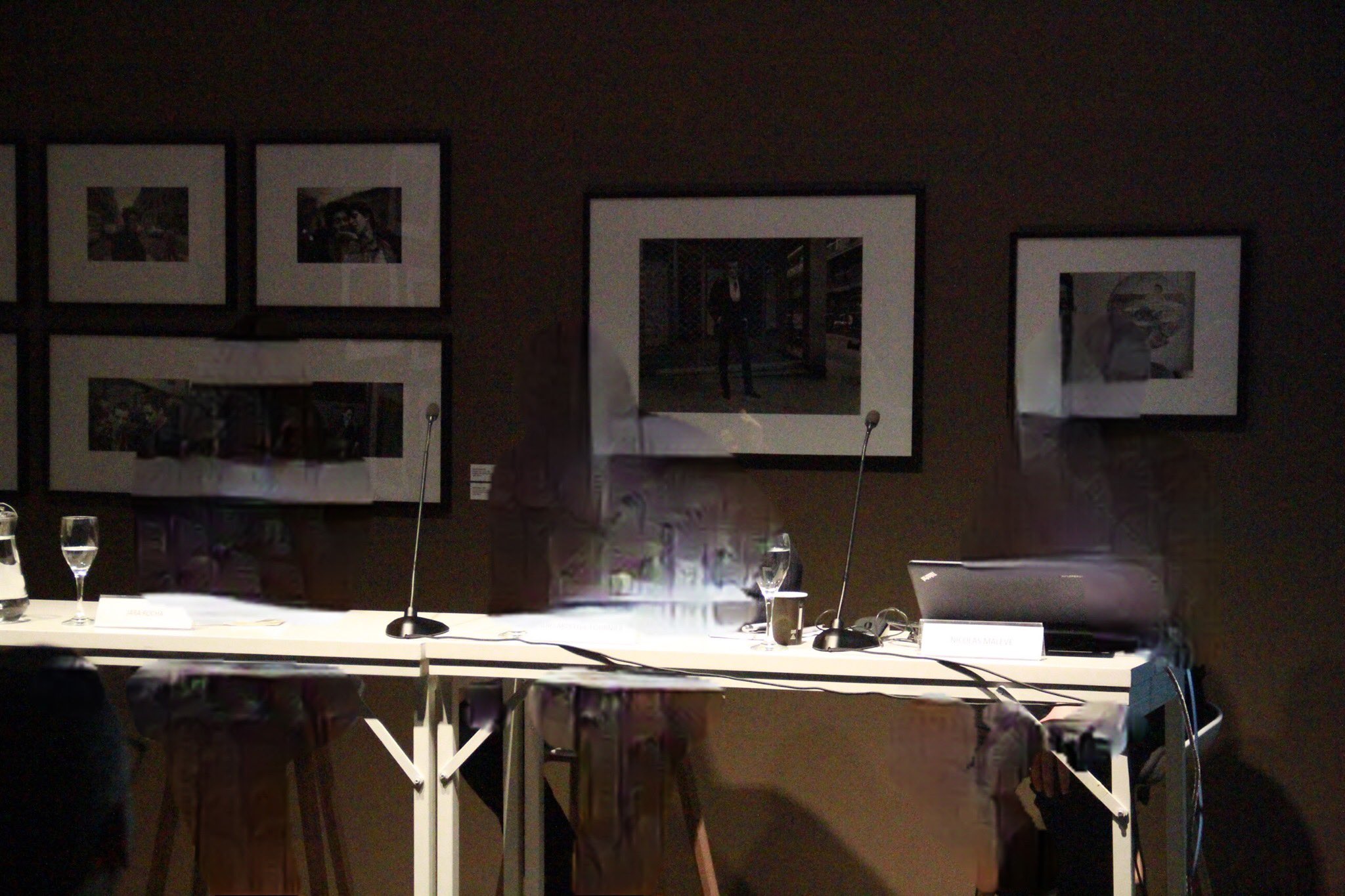
Y yo tendré la suerte de por fin sentarme en una mesa a conversar con Abelardo Gil-Fournier y Nicolas Malevé, dos de los pensadores/hacedores que más me han enseñado acerca de las implicaciones materiales y semióticas de la compleja amalgama que constituye lo que opera como imagen:
Los ecosistemas no-sólo-digitales en los que se inscribe el circuito de la visión contemporánea suceden en equilibrios semióticomateriales frágiles pero altamente potentes. Estudiar los procesos de aprendizaje o entrenamiento que tienen lugar en tecnoecologías específicas de la visión puede ser un modo de atender a distribuciones, densidades, vocabularios y temporalidades no tan frecuentes. Con perspectivas arqueológicas, archivísticas o de estética infraestructural, trabajos como los de Nicolas Malevé y Abelardo Gil-Fournier proporcionan una necesaria complejización de las preguntas por qué agencias están imbricadas en las miradas también maquínicas, y cuáles son las implicaciones medioambientales, políticas y/o estéticas de mirar así en nuestros aquí-ahoras.
En el marco del programa «Unsupervised Imaginations» de DONE, esta mesa redonda se ocupa de la siguiente pregunta: si en las densas tecnoecologías de la visión, la distribución del poder sucede de maneras específicas, ¿de qué modos los aprendizajes y entrenamientos maquínicos participan en afianzamientos, limitaciones o bloqueos de la capacidad de respuesta -o respons(h)ablidad-?
+ info de la sesión del 6 de febrero: http://done.fotocolectania.org/edicion4/debates/responshabilidades-tecnoecologicas_es/
+ info del programa de DONE completo: http://done.fotocolectania.org/edicion4/
7.12.19
21.11.19
The Courier Bag Praxis of Friction
"The Hidden Life of an Amazon User" sheds light on the environmental costs of Amazon’s aggressive monetization of its users: the user is not just exploited by means of free labor, but is also forced to assume the energy costs of such exploitation.
The crisis of presence is always already mundane: a power wasted –or washed away– by a capitalist patriarchocolonial matrix of woven and wefted infrastructures: a braid of powers entwined towards any sort of extraction, growth, and control. The linearity of the uneventful scroll in Moll’s work starts to be crooked, rotated, flipped, interlaced. In its crafted disorientation it asks: Which trans-actions lay beneath, beyond, or behind the monumental source code of a banal purchase (banal both in terms of content and action)? How many instances of capitalist turbo-universalism and techno-colonialism are carried in this scrolling gesture? What are the nuances of totalitarian innovation brought by with the questions that this frictional scroll makes available?
Friction is the result of Moll’s sticky delivery of codified entanglements and complex matterings whose effects and affects are otherwise kept hidden in plain sight. Moll takes as a praxis of friction the tilting of the scroll of a certain hiddenness of presence while braiding the measuring units of a world that contains some lives but not others. In doing so, her work opens up the conversation about what partial reparations might be at hand under elastic guises radically different to those of straight guilt or erected victimhood. And she unheroically winks: ‘be scroll, my friend’.
Full text here -> https://www.janavirgin.com/AMZ/rocha.html
15.11.19
[talk] ted it yourself / cognitariado y materialidad
El 15 de noviembre a las 19 h, Lucía Egaña y Jara Rocha realizan la performance Cognitariado y materialismo, la cual explora las dimensiones del “capitalismo cognitivo” y del “trabajo inmaterial”. La acción es fruto de la fase de colaboración entre las dos artistas dentro del proyecto «Metodologias subnormales», el cual Lucía Egaña está desarrollando en el marco de la Beca Fundació Banc Sabadell – Hangar.
El resultado de esta fase de investigación acerca del «capitalismo cognitivo» y de las implicaciones del «trabajo inmaterial», se materializa en forma de performance bajo un formato popular que remite directamente a la difusión rápida de ideas y conceptos culturales y de la producción del conocimiento, que circula habitualmente: la charla TED, o TedTalk.
«Una idea TED» responde a lógicas aceleradas de producción que hacen que los resultados parezcan ligeros. No importan los procesos: todo es productivo. Esta cultura del acelerón nos hace partícipes del desarrollismo de la «innovación totalitaria». En otras palabras: TED es un formato para un mundo tan rápido que necesita que el proceso sea borrado para que exista un resultado simple, aparentemente espontáneo y único.
Las investigadoras invitan el publico a ser parte de este acto y poder colaborar en un posterior debate en torno a las ideas que se ponen en juego.
+ info: https://hangar.org/es/recerca/noticies/ted/
6.11.19
[curso] política proxy / futuros próximos
Cada vez con más frecuencia nos sorprendemos desenvolviéndonos en escenarios cuyas características parecen pertenecer más al mundo de la ciencia ficción que a lo que habitualmente interpretamos como realidad, y cuyas claves de comprensión parecieran venir a nosotros desde la proximidad de un futuro inminente antes que del pasado. El modo en que el trabajo y el consumo abandonaron su lugar y tiempo tradicionales para colonizar la totalidad de nuestras vidas, incluyendo aquellos momentos más íntimos y solitarios; el hecho de que la abrumadora mayoría de las preguntas que le hacemos al mundo tienda a resolverse en la superficie de contacto entre la yema de nuestros dedos y el teclado de nuestras computadoras; la inquietante mutación de la subjetividad en un perfil que cotidianamente rediseñamos y compartimos con los demás, y tantas otras manifestaciones del presente, nos invitan a reconsiderar las categorías con las que tradicionalmente pensamos a la sociedad, la política
y el arte, y a crear nuevos conceptos allí donde aquellas hayan entrado en una suerte de desfasaje teórico respecto de los fenómenos que intentamos comprender. Desde una crítica cultural expandida, de cualidad elástica, con flexibilidad para recibir materiales de fuentes diversas como la teoría política y la música pop, la filosofía y la cultura digital, el pensamiento sobre la técnica y las artes visuales, nuestros invitados dialogarán con una serie de títulos y autores ahondando en las claves de una imaginación política anticipatoria.
Caja Negra propone un itinerario por las ideas fuerza y herramientas clave que han marcado las especulaciones en torno al futuro desarrolladas en estos últimos años. Centrándonos en la colección Futuros próximos, y en diálogo con otras bibliografías, abordaremos un repertorio de recursos críticos para leer las transformaciones que están teniendo lugar en nuestro presente y que determinarán nuestros campos de actuación para poder sobrevivir.
[Organizado por Marta Echaves de Caja Negra Editora en La Central de Callao, Madrid]
Programa
10 de octubre: Sesión 1 Los futuros perdidos, Mark Fisher y Berardo Bifo, con Marta Echaves
Bloque 1 Aceleracionismo: esa herejía política
17 de octubre: Sesión 2 -Nick Land y sus Estudios del Colapso de la Civilización Occidental, con Toni Navarro.
24 de octubre: Sesión 3 -El Manifiesto Aceleracionista a debate, con Toni Navarro
Bloque 2 Por un futuro “extraño”
31 octubre: Sesion 4–Brujas, cyborgs y alienígenas: Del ciberfeminismo al xenofeminismo, por Marian Garrido.
7 noviembre: Sesión 5 -Política proxy, por Jara Rocha
Bloque 3 ¿Hay un mundo por venir?
5.11.19
3ª renderización / desborde de la publicación en la Sala Amadís
El proyecto Render finaliza en la Sala Amadís a través de la presentación de la publicación que recoge todo el proceso de investigación de este proyecto de comisariado beneficiario de las Ayudas Injuve 2018/2019.
Render es un proyecto de investigación en el que han participado Quiela Nuc (Madrid, 1990); Mar Reykjavic (Sagunto, 1995) y Jara Rocha (Madrid, 1984) y que se ha desarrollado a modo de residencia artística con tres renderizaciones abiertas al público que han tenido lugar tanto dentro como fuera de la Sala Amadís.
La última de estas tres renderizaciones comprende la presentación de la investigación mediante una circulación espacial por la sala que alberga diferentes capas y alusiones a la publicación, pero que trasciende su formato y se expande espacialmente haciendo que los cuerpos de los participantes oscilen alrededor de esos objetos y reflexionen sobre el acto íntimo de la lectura en un espacio público y colectivo.
El diseño es de VenidaDevenida: http://www.venidadevenida.com/
6 de noviembre de 2020
19.30h
Participación libre hasta completar aforo
+ info: https://render.hotglue.me/
2.11.19
número 2 de L/E/N/G/U/A/J/E/o
DESCARGA número 2 completo [PDF]
31.10.19
RENDER ME GREY
or
a coffee conversation last summer,
published at sink.sexy
this is how we can maybe understand grey matter or grey literature: a spot from where you can turn the very probable into quite possible. This is where things can be altered. Precisely because this is the place where things can be written down, where things start tracing the too probable trajectories of the contemporary structuring of matter, and can be somehow partly re-written and changed from the probable to the possible in an instant. This at least is where the probable and the possible blur, they are both there. This is the spacetime of transformation.
+ at http://sink.sexy/texts/rendermegrey/
25.9.19
Depths and Densities: a bugged report / Transmediale Journal
Possible Bodies is an ongoing collaborative research on the technical and lively tensions between so-called bodies and volumetric practices. The inquiry is ready to emerge at any possible intersection that lies between two vectors. One vector is constituted by physical bodies that might be somatic or not, human or not, isolated or not, named or not. The other vector is tensed by the calculation the volume bodies occupy with their very presence in space, being virtual—made of bits—or physical—made of atoms.
The project aims at problematizing the concrete and fictional entities that “bodies” are, in the context of 3D tracking, modelling, rendering, calibrating, and scanning operations towards them. Such operations have perhaps grown in sophistication and speed within the digital realm, but are certainly not new. The particular contemporary topology of volumetrics draws from intricate genealogies of many knowledge clusters of modernity (perspective setting procedures, occupation measuring techniques, scale calibration tools, average volume normalizing, position prediction methods). Protocols and paradigms proliferating and circulating confirm the limitations of how, when, where, and why bodies could or should be considered and measured. In other words, there is a continuum that facilitates the smooth flow of very specific volumetrics (and not others) from architecture to border surveillance—passing through the spectacularization of sports, biomedical practices—to the juridical, the military, and the pornographic. The technoscientific conditions for the smoothness of this flow constitute the rigidity of mere probable trajectories along the continuum of volumetrics and restrict the wild twists and surprising hacks needed to jump from the probable to the possible!
Of course scale affects the mathematics of presence very strongly. Take the scale leap from individual somatic corpo-realities (of, say, zoologically recognized organisms) towards the so-called body of earth. Quite a jump evidences how the infrastructural complex of geo-operations such as mining and the measuring of soil depends on software tool sibling to those used in the biomedical realm (like tomography), but adapted to a different field for geological data handling, interpretation and 3D-visualization. Such tools power both bio-medical imaging and techno-colonial subsurface exploration and keep corpuses of knowledge persistently affecting each other. In Possible Bodies there is an interest in attending to how these parallel technical developments contribute to a crystallization and standardization of such operations.
Under the guise of a one-afternoon workshop at transmediale 2019, Possible Bodies invited a group to collectively study open-source tools for geo-modelling while attending to the different regimes—of truth, of representation, of language or of political ideology—they operate within. It attempted to read those tools and a selection of texts in relation to one another, with the plan of injecting some resistant vocabularies, misuses and/or f(r)ictions that could affect the extractivist bias embedded in the computation of earth’s depths and densities. The workshop was a trans*feminist experiment and proposed to compile a “bug report” as an act of affirmative responsibility taking for this turbocapitalist momentum.
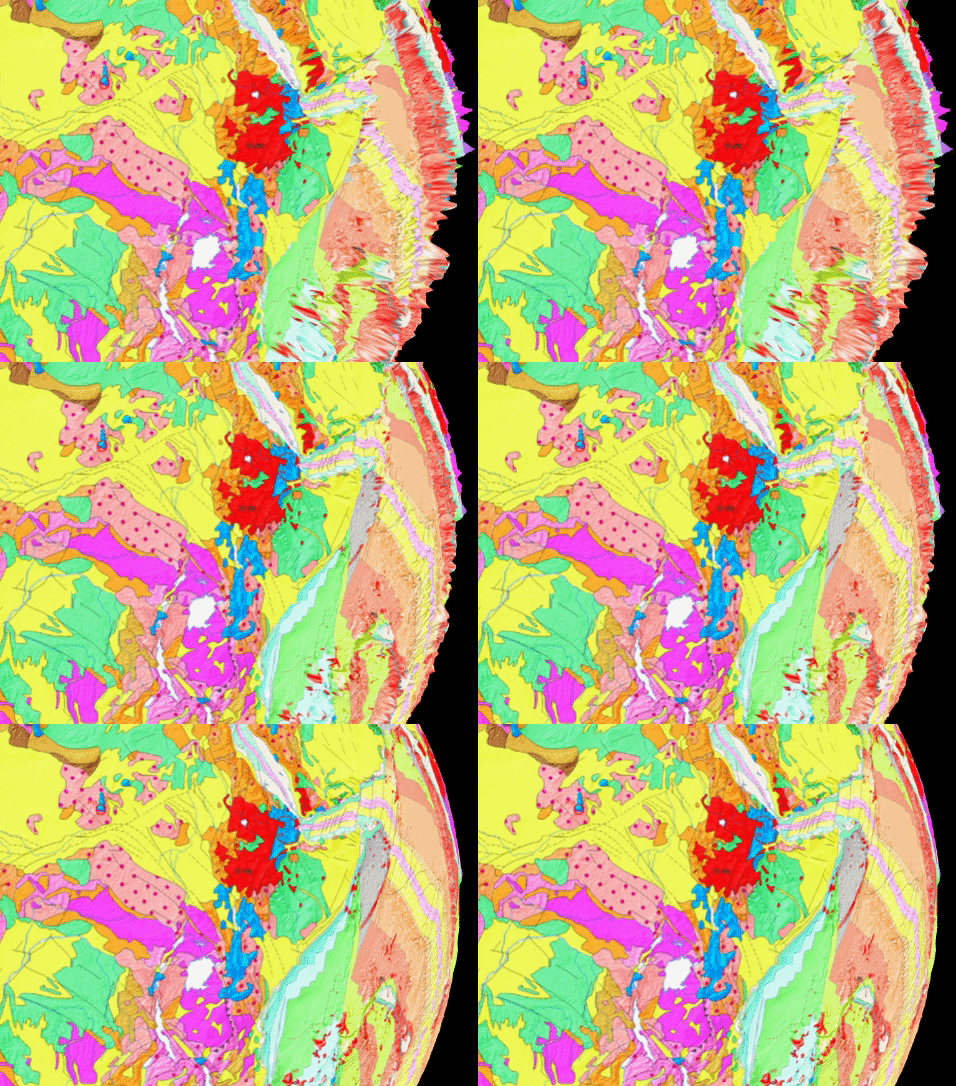
It was a hands-on situation that took the Gplates software platform as a case study. Gplates is an interactive plate-tectonics visualization program and an open-source application software that visually reconstructs very complex datasets of use for the geophysicist community.This platform was chosen as the affected, affective, and perhaps effective infrastructure to converge around—and attend to—for the workshop, while triangulating its visions of the Earth with software technology and bits of critical theory.
The Depths and Densities workshop was populated by a mix of known companions and just-met participants (in total, a convergence of circa 30 voices), each bringing her own particular intensities regarding the tools, the theories, the vocabularies, and the urgencies placed upon the table. The discussions were recorded on the spot and transcribed later. This publication cuts through a thick mass of written notes, transcriptions, and excerpted theoretical texts, sedimented along five vectorial provocations: on the standardisation of time, on software vocabularies, on the activation of geontologies, on the computation of velocities, and on the techniques of 3D visualizations. Each vectorial provocation was taken up by a sub-group of participants, who assumed the task of opening up a piece of the Gplates whole (such as a technical feature, a forum, a tutorial, an interface etc.) and tensioning it with some text matter from a reader pre-cooked by Helen Pritchard, Femke Snelting, and myself. The platform worked as a catalyst for our conversations and hence its community of developers would eventually become deferred interlocutors of a report.
The following cut was made to share a sample of that afternoon’s eclectic dialogues in what could be transferred as a polyphonic bugged report:
--> https://transmediale.de/content/depths-and-densities-a-bugged-report
22.9.19
[euraca] sale programa once / att. a lxs que aman la poesía,
Susan Bee, Demonology, 2018 a lxs que la militan, a lxs que aún creen que tiene cosas pa decir aquí hoy ahora, a lxs que la leen porque saben que cuando pasa, pasa, a lxs que simplemente mueve el don de la curiosidad, a lxs que sospechan enormemente de las posibilidades de un medio tan maltraído pero ahí siguen picando piedra, leyendo, traduciendo, escribiendo, editando:
hola queridxs,
aquí Seminario Euraca tiene el placer inmenso de invitaros a su programa ONCE (aunque en verdad son doce los programas que ya hicimos) de poesía non stop organizado en torno a la visita a la península de los poetas Charles Bernstein y Ron Silliman y de la artista Susan Bee a invitación de Aníbal Cristobo / Kriller 71 y Seminario Euraca, con la ayuda de Ana Longoni y Tamara Díaz Bringas (Museo Reina Sofía), Arts Santa Monica y espacio Saliva (Claudia Pagès). Antes de nada, para que todo pueda suceder, guárdense ya las fechas de la cosa:
S 18 oct. en Saliva y L 21 oct. en Arts Santa Monica
> Bee & Bernstein & Silliman en Madriz en persona:
X 23 y J 24 oct. en La Ingobernable y V 25 oct. en Museo Reina Sofía > > Sesiones de lectura y curro previas de Seminario Euraca:
V11 ·L14 · X 16 oct. en La Ingobernable
1) Que nadie deje de venir por no hablar inglés, haced el favor, que esto es Euraca y, por lo tanto, La Lengua se considera Las Lenguas & sus hablantes & el paso entre una y otrxs, u know? Spanglish spoken here, aquí se habla Poesía / poetry y nadie que quiera se queda fuera: hay traducciones a full hechas por nuestrxs own traductorxs Esteban Pujals y Elia Maqueda, y hay sus traducciones simultáneas y hay ganas de estar ahí rato largo pa hablar y leer y entendernos sabiendo que ni en espaniol nunca nos entendemos del todo.
2) Es posible que por las mismas fechas que estemos charlando poesía esté saliendo de imprenta de internet el superesperado número 2 de nuestra revista L/E/N/G/U/A/J/E/o, de título y espíritu clamorosamente calcados de la revista de poesía editada por Charles Bernstein y Bruce Andrews (L=A=N=G=U=A=G=E) y la de arte editada por Susan Bee y Mira Schor (M/E/A/N/I/N/G).
¿Te vas a perder este pliegue del océano atlántico y cincuenta años de poesía en dos lenguas? ¿Te vas a perder todos esos momentos de intensidad de escucha cuando de pronto no entiendes una mierda de lo que oyes, de malosentendidos entre poetas que se admiran pero nunca jamás se han visto antes, de timidez a raudales, de balbuceo, de entrelenguas, de paciencia infinita y agotamiento cerebral hasta que a la tercera hora de sesión por fin aparece ese brillito que te vuela la cabeza para siempre porque Ah! algo de la lengua en tu cabeza cambió. ¿En qué otra cosa mejor vas a gastar el tiempo de noche que en la noche de la poesía, y de la poesía lenguajeo, además?
De Bernstein y Silliman y Bee qué decir en pocas líneas…? Que lxs tres no sólo hicieron su arte sino que se inventaron dispositivos de recepción y distribución (editoriales, recitales, revistas, listas de correo, archivos sonoros, pdfs online…) que ampliaran y horizontalizaran la conversación y que, una gran parte del tiempo, lo hicieron fuera del mundo académico y cuando entraron siguieron procediendo por cooperación en vez de por competición: por vibración en vez de por secamiento de la poesía en el rigor.
Pero tampoco te vamos a engañar: la obra de poesía que leeremos en este programa no es de las más sencillas ni sexies que te vayas a encontrar, o sí, si lo piensas desde el atractivo que los placeres complejos, tensos y raros y los efectos que generan en el cuerpo…
recuerda que todas las sesiones de Euraca son siempre abiertas y públicas, de libre acceso
y por favor DIFUNDE muxxxo boca-oído& en redes & por telepatía
ah, ¿y qué cómo se llama todo esto? Esto se llama La Lengua radical por precisión ajustadísima del sintagma y el movimiento que el sintagma describe pero también por hacer justicia (verdaderamente poética) con el libro del mismo nombre que armó en su día (en 1992, año de pax neoliberal) el euraca avant-la-lettre Esteban Pujals Gesalí, our own language poet permanently in da haus
SE
https://seminarioeuraca.wordpress.com/
9.9.19
CRAFT: Critiquing and Rethinking Accountability, Fairness and Transparency / Call for contributions
6.8.19
The Extended Trans*feminist Rendering Programme at Furderfield's Future Fair
@ the Commons of Finsbury Park, London. Saturday Aug 10th, all day long!
Limited places; book now at https://pad.constantvzw.org/p/underground.signup
+ info on Future Fair -> http://www.furtherfield.org/future-fair/
20.6.19
2º Render
Desde lo alto del Cerro de las Ánimas, al “otro lado” del río, se obtiene un ángulo desde el que Arganzuela brilla tanto como el sílex que hace miles de años yacía en sus tierras. Su topología vista en conjunto y con el sol de primera hora de la mañana, se asemeja a una de esas masas de arena kinética, tendencia en instagram. Una superficie pulida, simétrica, suave e inerte. Son muy pocos los segundos en los que se puede observar la imperturbabilidad de la arena. En vista satélite son tendentes a ninguno. Pero están los trompos y las fuentes.
Después, aparece el cuchillo o la navaja tornasolada para descubrir lo soterrado, esas formas de colores que caen como las lascas de la cuarcita recién afilada o que se expanden como los líquenes sobre las lápidas, porosos y resistentes al paso del tiempo, a sus capas: no brilla sólo aquí-ahora.
La arena se desmorona con el corte, caen los relatos hegemónicos y las grietas en la memoria material hacen visible lo errado, el daño, lo no contado, lxs otrxs cuerpxs. El fallo y la falla.
Un derrape en cenital, un estrato en horizontal, una vida no-lineal acotada a un enclave de pago. Economías del entierro cerca de un campo de. Es acaso un render del dónde-aquí.
En esta segunda renderización queremos rajarlo todo en un trozo de mundo para encontrar espacios de lo posible. Y lo haremos en la víspera de San Juan, durante esas horas que permiten romper el pasado y (re)generar una/otra cosa, un/otro lugar. Antes y/o después del cuándo-ahora.
Fecha: 23 de junio (11:30h)
Lugar: Madrid. Boca de metro Marqués de Vadillo (Salida: Antonio López).
Se recomienda llevar líquidos para favorecer la hidratación, calzado cómodo y protección solar.
Recorrido: http://www.injuve.es/sites/default/files/adjuntos/2019/06/recorrido_render2.jpg
+ info: http://www.injuve.es/creacionjoven/noticia/segunda-renderizacion
6.6.19
Volumetric Ecologies: Environments, bodies and mediated worlds / Goldsmiths, U. of London / 14.06.2019
With this in mind, Volumetric Ecologies brings together researchers, artists and theorists to investigate the implications and possibilities of volumetric imaginaries of environments. As part of the volumetric turn we explore more-than-human immersive technologies and the ways in which they figure environments across an expanded field of practice. The workshop will critically reflect on the agency of computational arts practices as a significant force in shaping the volumetric turn. The evening keynote by Deborah Levitt will explore how the world-building capacities of animation and VR technologies bring into being new forms of cosmotechnics. This two-day explorative forum presents a diversity of perspectives and practices which reimagine and recast the constructs of environment, bodies and mediated worlds through the articulation of volumetric practices.
Hosted by ICE, Computational Arts at Goldsmiths, and in partnership with the Vasari Research Centre for Art and Technology at Birkbeck, University of London. Organised by Helen Pritchard, Rachel Falconer and Joel McKim.
Friday June 14
11.00am - 1.00pm | Volumetric Demo open to public | VR Lab
1.00pm - 5.00pm | Workshop | VR Lab
Demo and research workshop providing an opportunity to engage with current practice and research across the volumetric field. Including work by artists and practitioners Nishat Awan, Marta Di Francesco, Clareese Hill, Hyperbation, Hyphen-Labs, Maggie Roberts aka mer, Possible Bodies: The Underground Division (Jara Rocha, Helen Pritchard and Femke Snelting), Jane Prophet and more tba.
With responses from Maria Dada, Claudia Dutson, Rebecca Coleman, Federico Fasce, Deborah Levitt, Joel McKim, Shela Sheikh, Chaired by Rachel Falconer.
+ info https://www.gold.ac.uk/calendar/?id=12597
Relearn curved. First curl: Rotterdam/Varia
For the Rotterdam control point on the Relearn curve, we propose to together attend to a subject zone (*) where different digital network practices intersect. This subject zone can morph into multiple directions throughout the session. Our specific interest is in how publishing formats (**) operate with/on/through this zone.
* There are many questions in the air when we start to speak about digital infrastructures, hosters, servers, services, networks and their technical realities. Instead of picking one and diving deeper, we thought it would be more interesting to present a range and explore different vocabularies, protocols, technologies, infrastructures. We invite you to join Relearn to stretch this zone, starting from or moving towards:
- ▝ digital interdependencies
- ▘ affective infrastructures
- ▝ homebrew networks
- ▗ networked entanglements
- ▖ feminist servers
- ▖ federated networks
- ▝ and-and-networks
- ▚ digital autonomy
- ▖ transitional infrastructures
- ▞ digital selves-organisations
- ▖ so-and-sovereignty networks
- ▝ out-of-the-cloud thinking
- ▚ …
- ▝ multiple readers
- ▖ cross-readings created through algorithms
- ▞ logbooks
- ▝ syllabi
- ▚ documentation
- ▖ annotations
- ▝ cookbooks
- ▖ tutorials
- ▚ README
- ▖ bug reports
- ▗ link dumps
- ▝ scores
- ▖ …
+ info: http://relearn.be/2019/
+: http://varia.zone/